No. 111 — Vernacular computation ⫶ We Computers ⫶ Like-minded internet
Shelf-discussions

My name is Linda. I write a bi-weekly newsletter about computer science, childhood, and culture.
“Shelf-discussions as a way of organising,” I wrote the other day as our long-awaited bookshelves finally arrived, the piles began to disappear from floors, and strange book pairings emerged on the shelves. Outside home, book-fair season has kicked off, and it feels both familiar and new to be among other authors. I’ll have some fun news about my non-fiction book soon, but first I’ll wrap up the fall holiday weeks with a small writing retreat at the charming bookstore Vinhan kirjakauppa.
Scroll down for a Texas teachers opportunity, inspiration from a Chicago school, and the weirdest book I’ve started this year.
1.
Last week I did a talk called AI Is Our Multiple-Choice Test. The best part was an educator who reached out afterward to share the work their classes have been doing.
2.
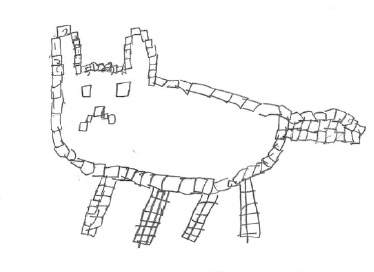
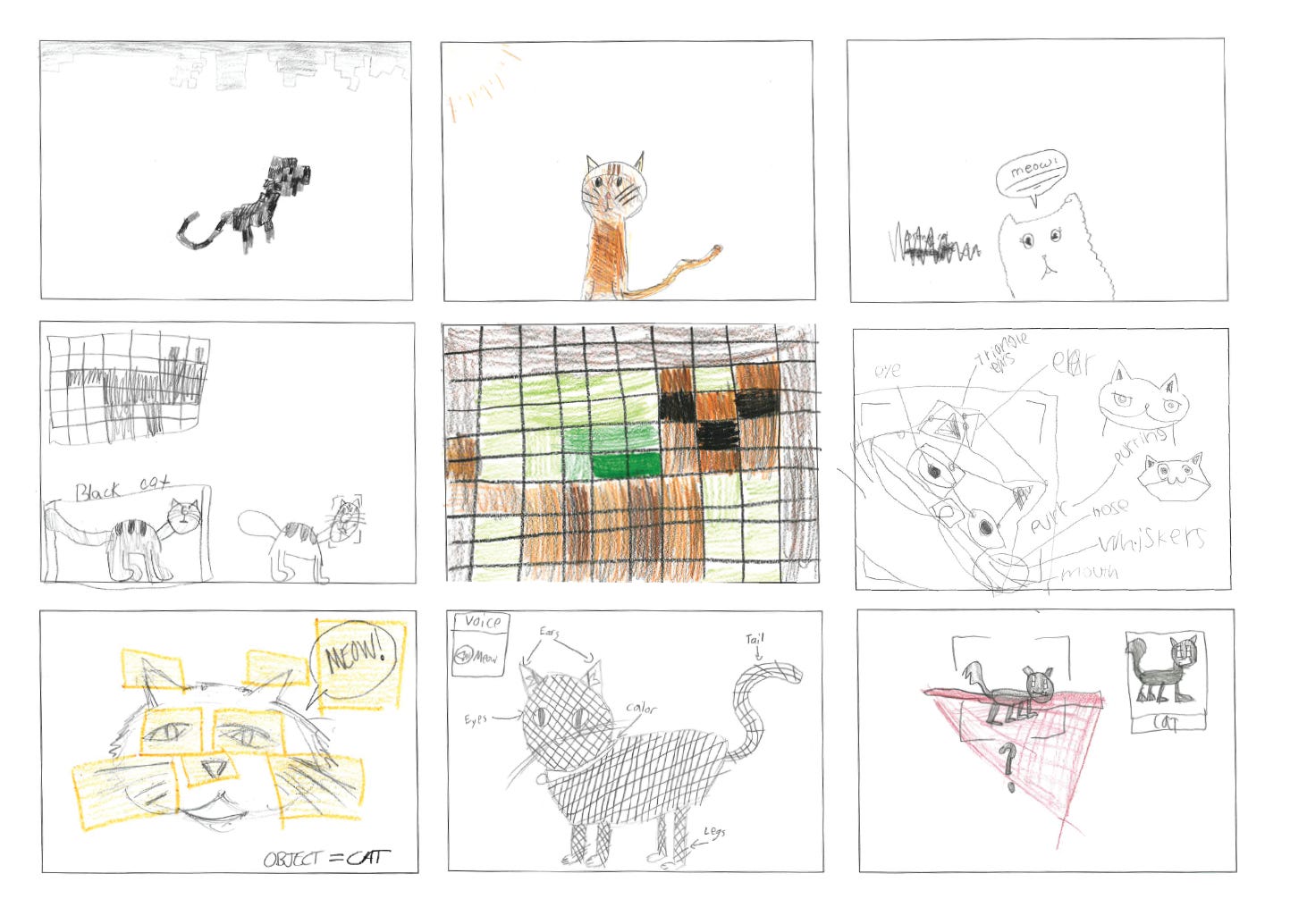
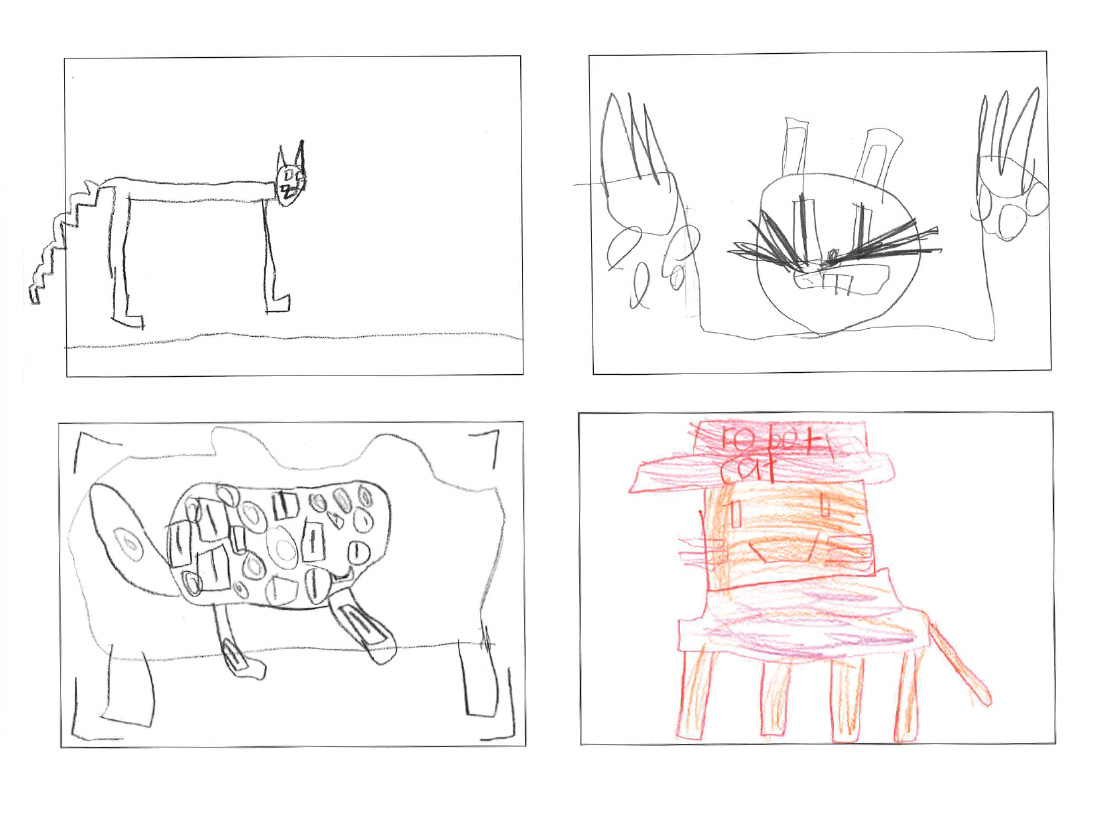
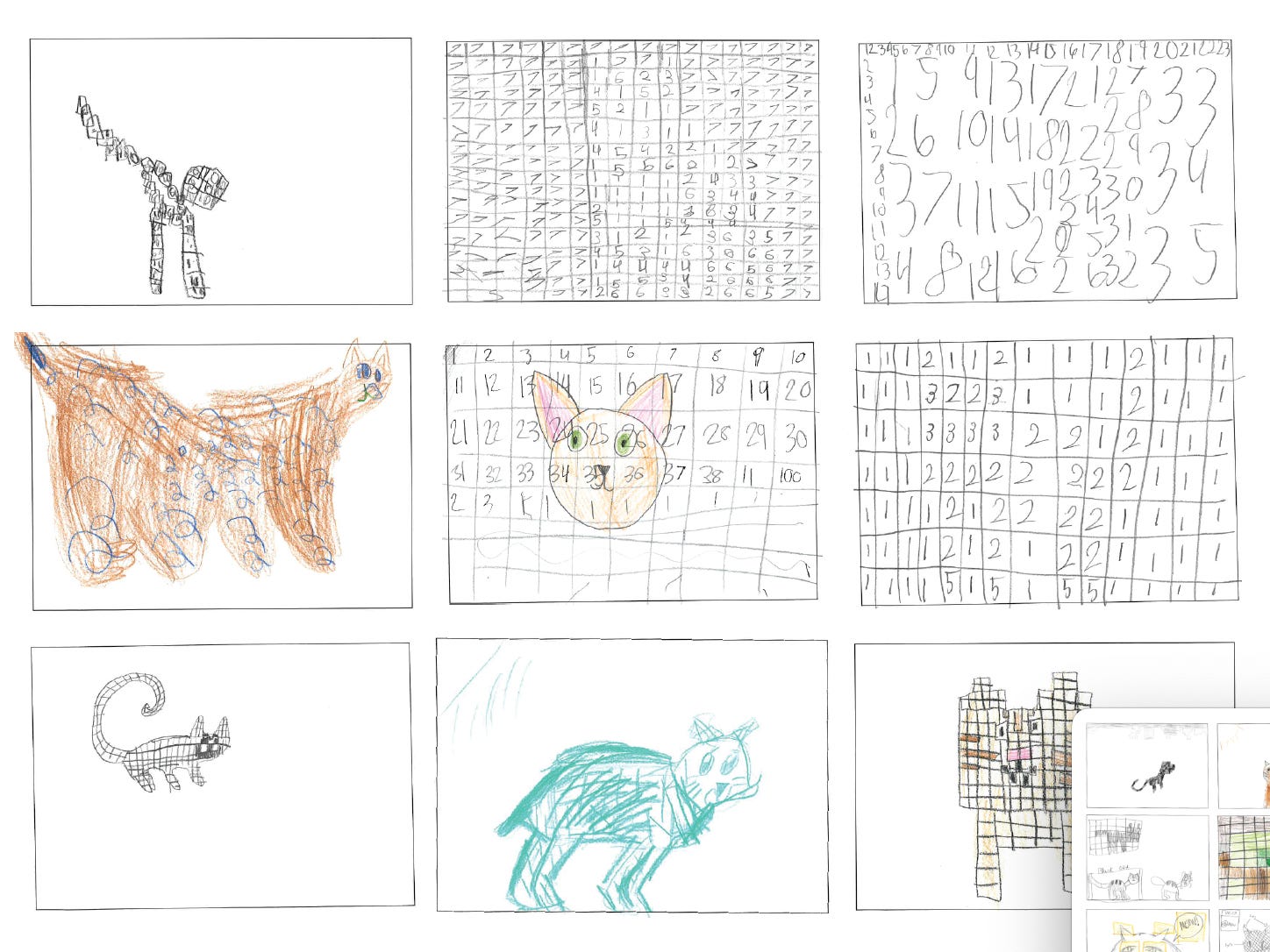
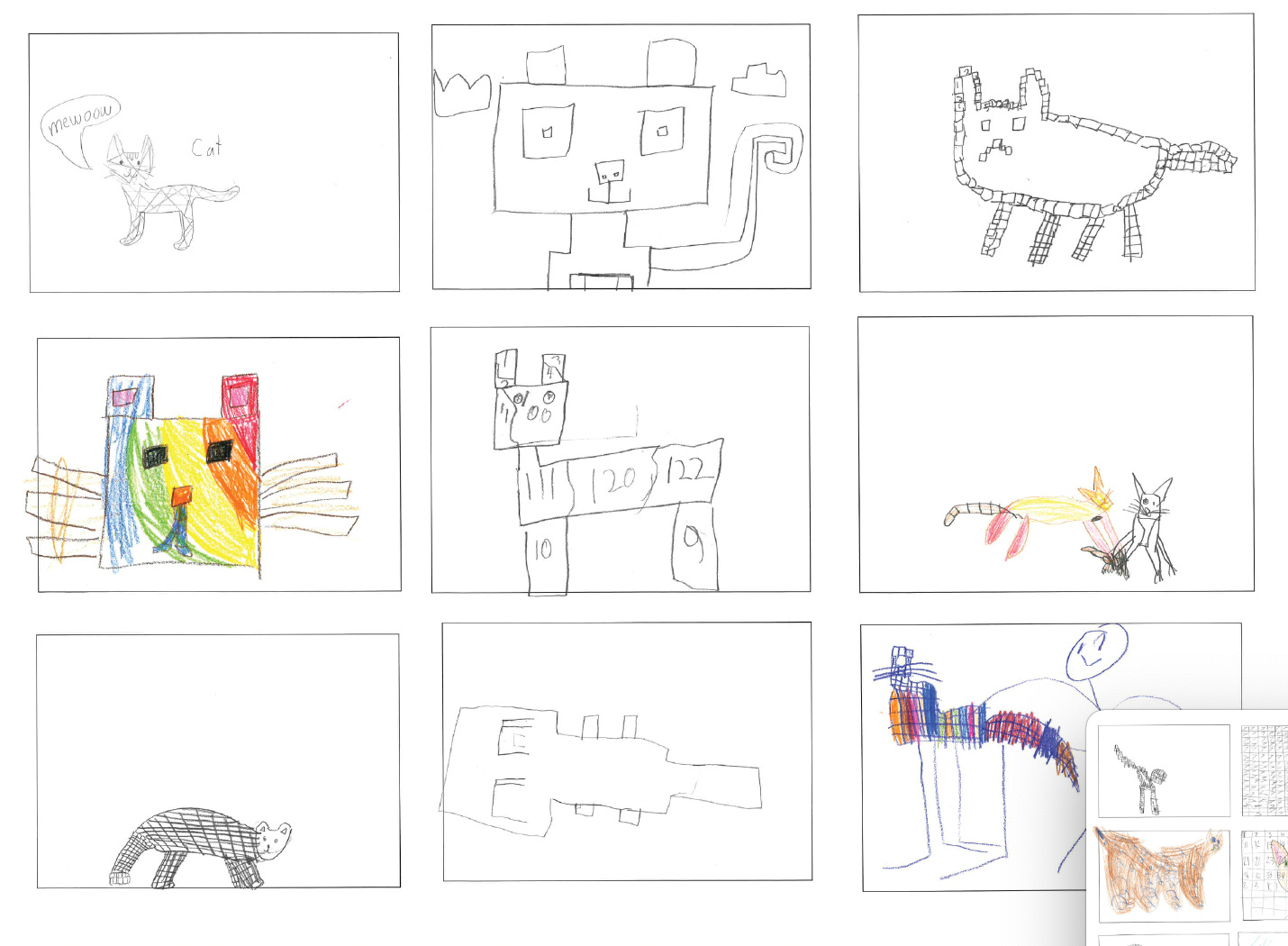
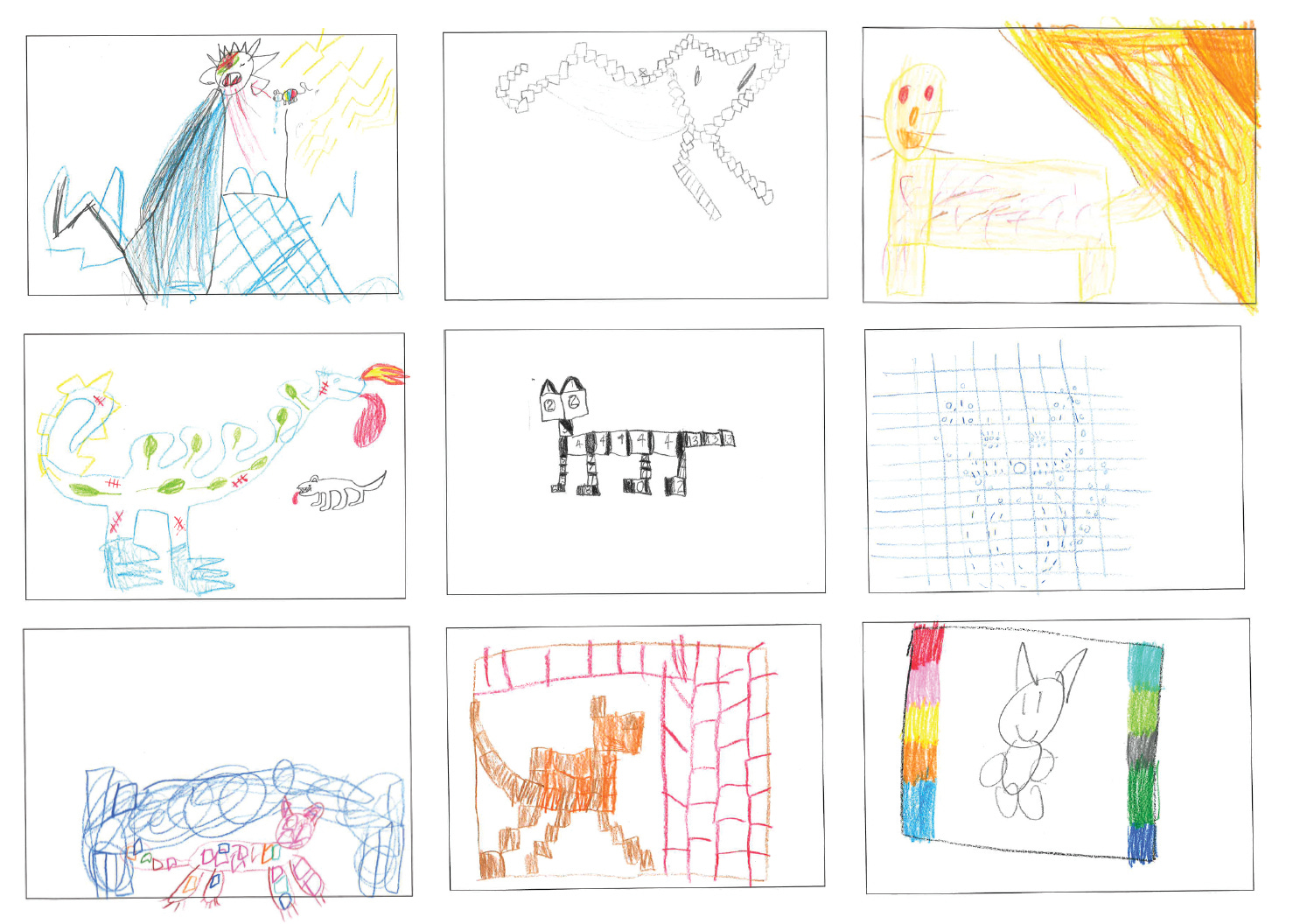
So, this editions illustrations come from Dana Stewart’s computer science class at Catherine Cook School in Chicago. 3rd- and 4th-graders visualized how an AI model might “see” a cat as a part of their AI learning.
For inspiration, see the activity in No. 68 — They All Saw a Cat ⫶ How Big is YouTube? ⫶ Moonbound or the follow-up workshop in No. 74 — They All Saw A Computer ⫶ Lavender Velvet ⫶ Inventing Kindergarten (Shared with permission.)
3.
We Computers by Hamid Ismailov is the weirdest and wildest AI book I’ve read this year. It’s about French, Persian and Uzbek poetry and large language models, with real style and depth. Here’s a lovely discussion between the author and his translator.
I like when literature tries to figure out how AI or non-human computer intelligence might sound. A notable example: Robin Sloan’s chronicler in Moonbound.
4.
Fall means it’s almost book-awards season. So why are the trophies so often like office paperweights?
Two delighful Paris exceptions:
Prix de Flore. The winner doesn’t just get money. They also receive the right to drink a glass of Pouilly-Fumé at Café de Flore every day for a year, served in a glass engraved with their name and kept at the café.
American Library in Paris Book Award. Each year the Library commissions two hand-bound copies of the winning title from Parisian artisans, one for the author, one for the Library’s Special Collections.
5.
I’ve loved these 30-minute conversations: from Guatemala to Seattle, from Rotterdam to Helsinki. They feel like what the internet promised, meeting like-minded people across the globe.
I’ve decided to keep the calendar open, so pop by!
If you want to talk about what you’re working on, trying to work on or thinking about working on and think I might be able to help, schedule a time.
6.
Brian Doyle’s “Their Irrepressible Innocence” (2017) sums up my method. When tech–AI–2020s culture talk gets too loud, I head to a kindergarten.
Whenever I find myself growing grim about the mouth; whenever it is a moist, gray November in my soul; whenever I find myself expecting to be cut off in traffic, to be shortchanged at the store, to hear an ominous clank in the transmission, to catch a cold, to be ludicrously overbilled by the insurance company, to find the library closed early, to endure computer malfunction, to discover the wine sour, to lose my keys, to discover a city of slugs in the cellar, and to find a dead owlet under the cracked front picture window, then I account it high time to get to a kindergarten as fast as I can
If you give them time and afford them the clear sense that you are not judging or assessing or measuring them in any way, they will stretch out and tell you tales of adventure and derring-do that would make filmmakers and novelists drool.
7.
I found an interesting passage in Margaret Wertheim’s Does a sea slug understand hyperbolic math?
Early modern artisans refined techniques for imitating nature, then wrote about them in pamphlets, creating an early form of technical writing that shaped how we think about knowledge. Historian Pamela H. Smith calls this vernacular natural history: hands-on, material inquiry running alongside the academic story of science. Wertheim proposes valuing vernacular mathematics too, the quiet, non-academic practices in craft and making that carry deep mathematical ideas. And yes, I immediately started thinking about what vernacular computing might look like.. (there are a few google hits, delightfully many years apart, but still a lot of space to think!)
8.
Are you a K–12 teacher based in Texas, or know someone amazing there?
I’m planning a new Playful Computing professional development workshop for 2026.
It will be fully funded (no cost to teachers), and participating educators will receive a stipend for completing the course. Also eligible would be Texas librarians, instructional coaches and regional education service Center (ESC) personnel.
Reply here to stay in the loop, or share this with a Texas teacher who might love to join.
9.
P.S Me, trying to summon a Substack API that does not exist. I miss 2010s, when getting a feed of your own writing wasn’t behind tricks and tooling..