
No. 129 — Summer books
Fresh coat of moss

My name is Linda. I write a bi-weekly newsletter about computer science, childhood, and culture.
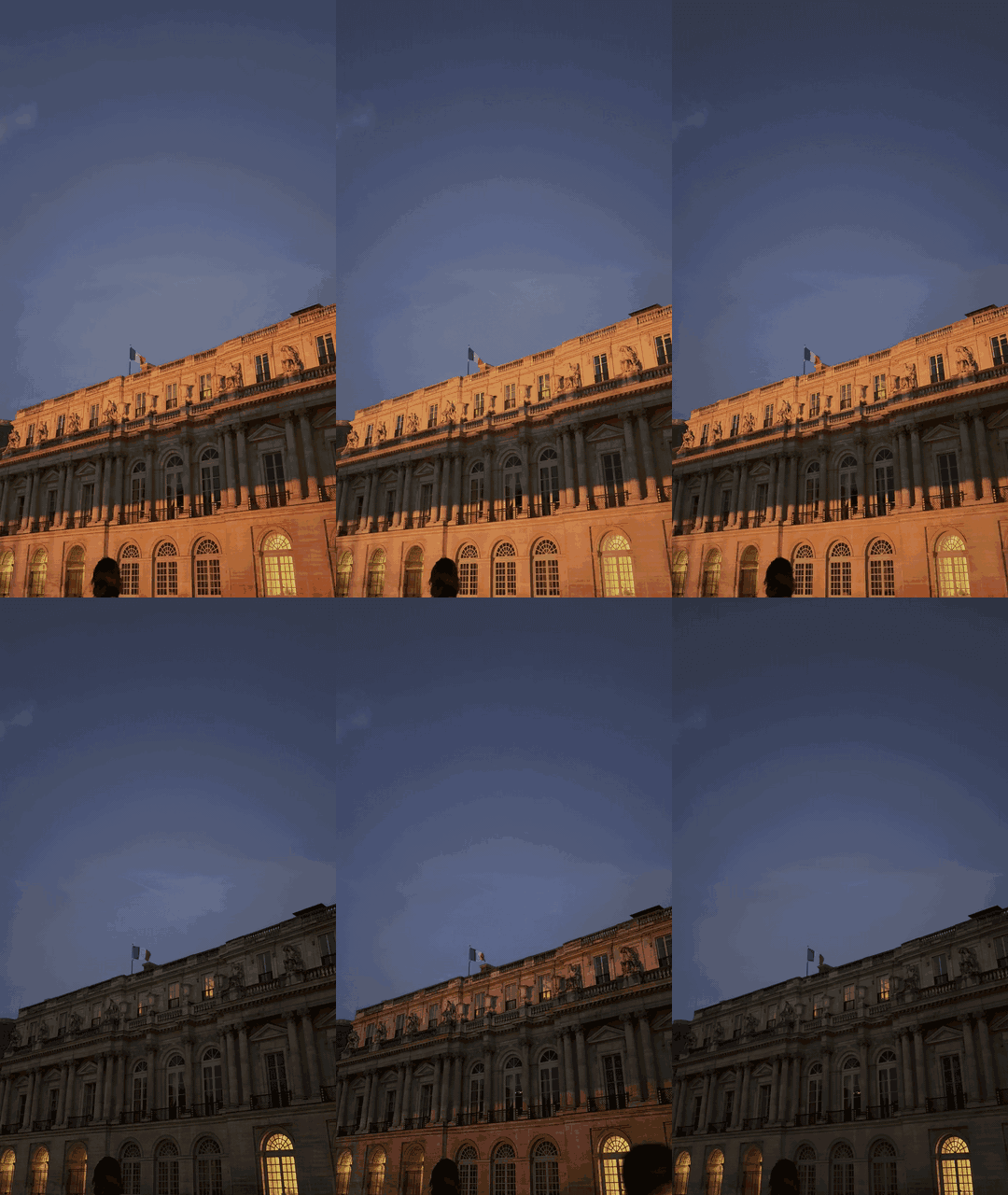
On Tuesday it was Fête Nationale du 14 juillet (or Bastille day, like the English-speaking world wants to call it). We went to see Peggy Gou play at Palais-Royal, which was bonkers. I watched her play over the rooftops of Seoul in the strange spring of 2020. I adored her music video with Ólafur Eliasson. On Tuesday it was Peggy playing house music at Palais-Royal, an 18th-century courtyard in the 1st arrondissement, famous for Buren columns (which I adore). And I was home by metro in nineteen minutes.
One of my favorite stories of Fête Nationale comes from Stefan Zweig’s Decisive Moments in History which I read back in 2019, before I had any idea I would move to France. He tells the story of the Marseillaise, and how in April 1792, after France declares war on Austria, the mayor of Strasbourg asks a young engineering officer, Claude Joseph Rouget de Lisle, to write a marching song for the Army of the Rhine.
Rouget de Lisle writes both words and melody in one sitting. The Army of the Rhine doesn’t care about it, but months later, volunteers from Marseille sing it marching into Paris, which gives the song its name. Meanwhile Rouget de Lisle never composes anything interesting again. He’s actually a royalist who is horrified by the revolution his song fuels! I think about this every time I hear Allons enfants de la Patrie…
It's the summer reading edition, my fifth! Recommendations first, then a self-interview stolen from The Reading Life, then the full list of everything I've read this year. (Previous summer recommendations here: 2025, 2024, 2023, 2022).
When I try to recall what I took from Siri Hustvedt’s Ghost Stories, I recall the feeling of her grief. Same with unbraiding Weatherby’s arguments about language, or following Tuttle’s footsteps through a Paris. Ursula K. Le Guin calls this the carrier-bag theory of fiction. Sasha Chapin calls books subjectivity-merging devices. Whatever you call it: an idea doesn’t arrive pre-packaged in a book. It needs the duration of a book to come into existence. It’s not a transaction (although those books exist too), but a construction.
So, a few suggestions for the summer based on books I’ve read this year:
Books that left one, strong idea
These are the novels that created an argument about the world I still think about. Patchett’s Whistler is possibly my favorite book of the year.
Whistler by Ann Patchett
Ghost Stories by Siri Hustvedt
North Woods by Daniel Mason
Heart the Lover by Lily King
Language, fast and slow
Somehow this spring I kept picking up books about language. Children acquiring it, machines generating it, bilingual brains switching between the two...
The Laws of Thought: The Quest for a Mathematical Theory of the Mind by Tom Griffiths
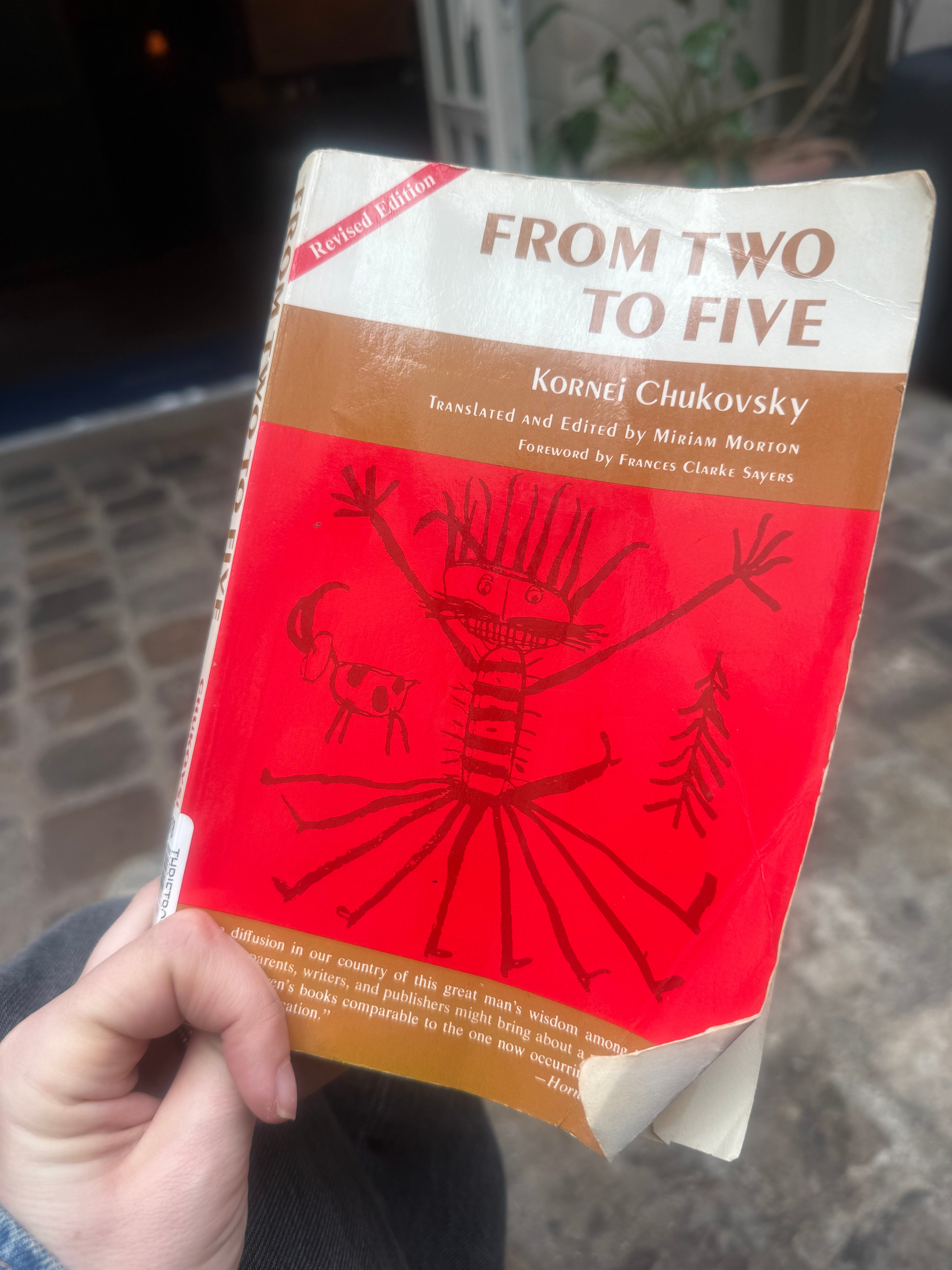
From Two to Five by Korney Chukovsky
A World Appears by Michael Pollan
The Bilingual Brain: And What It Tells Us about the Science of Language
by Albert Costa
Language Machines: Cultural AI and the End of Remainder Humanism by Leif Weatherby
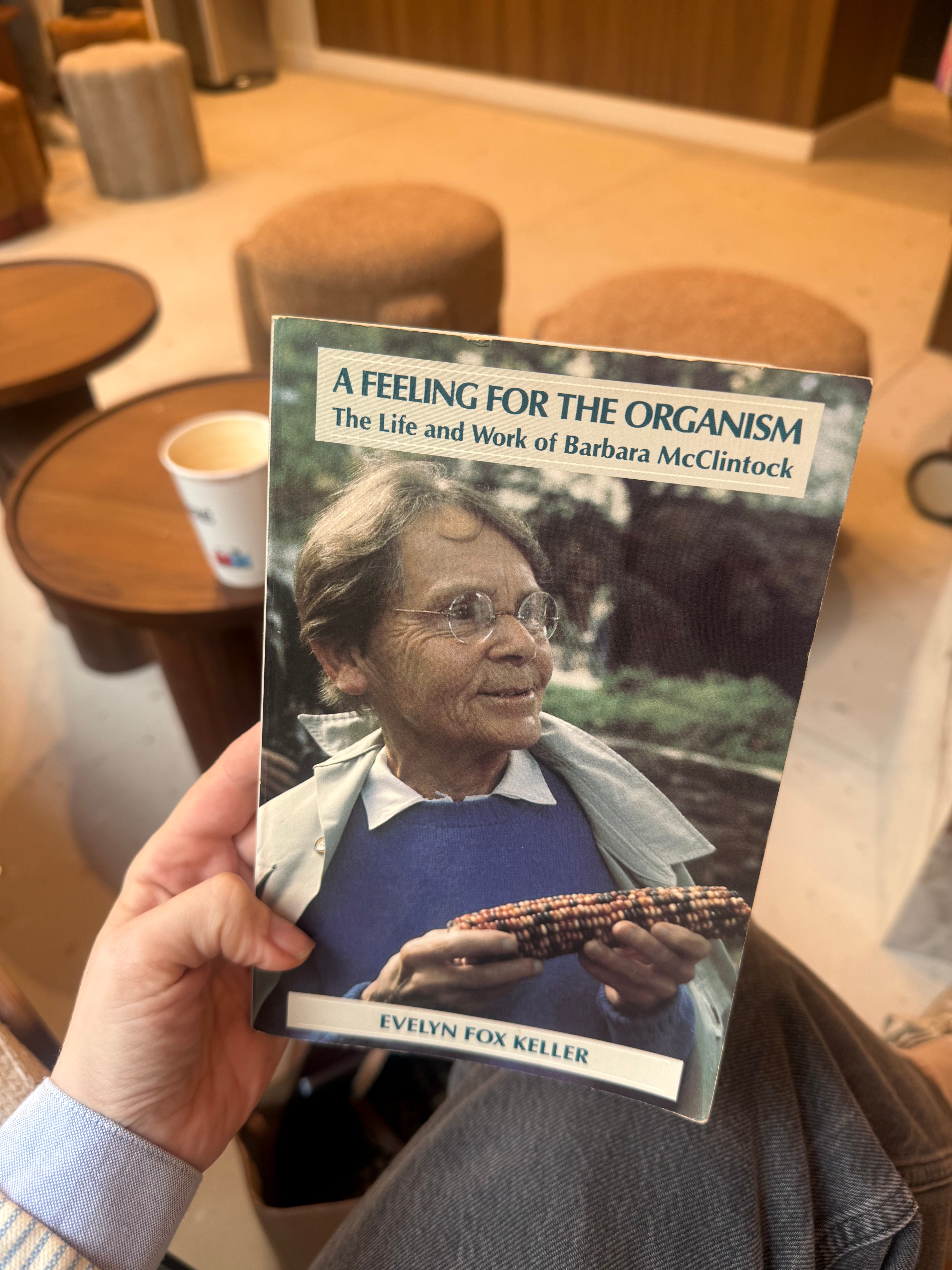
My spring of Evelyn Fox Keller
I read three books by the same biologist-philosopher in four months for an upcoming project. Fox Keller spent her career asking what it means to really look at an organism. I also added Erdrich and Agg, since they are doing something similar, with the pregnant body.
Making Sense of My Life in Science by Evelyn Fox Keller.
Refiguring Life by Evelyn Fox Keller.
A Feeling for the Organism: The Life and Work of Barbara McClintock by Evelyn Fox Keller
The Blue Jay’s Dance by Louise Erdrich
Life, Almost by Jennie Agg
Someone else’s Paris
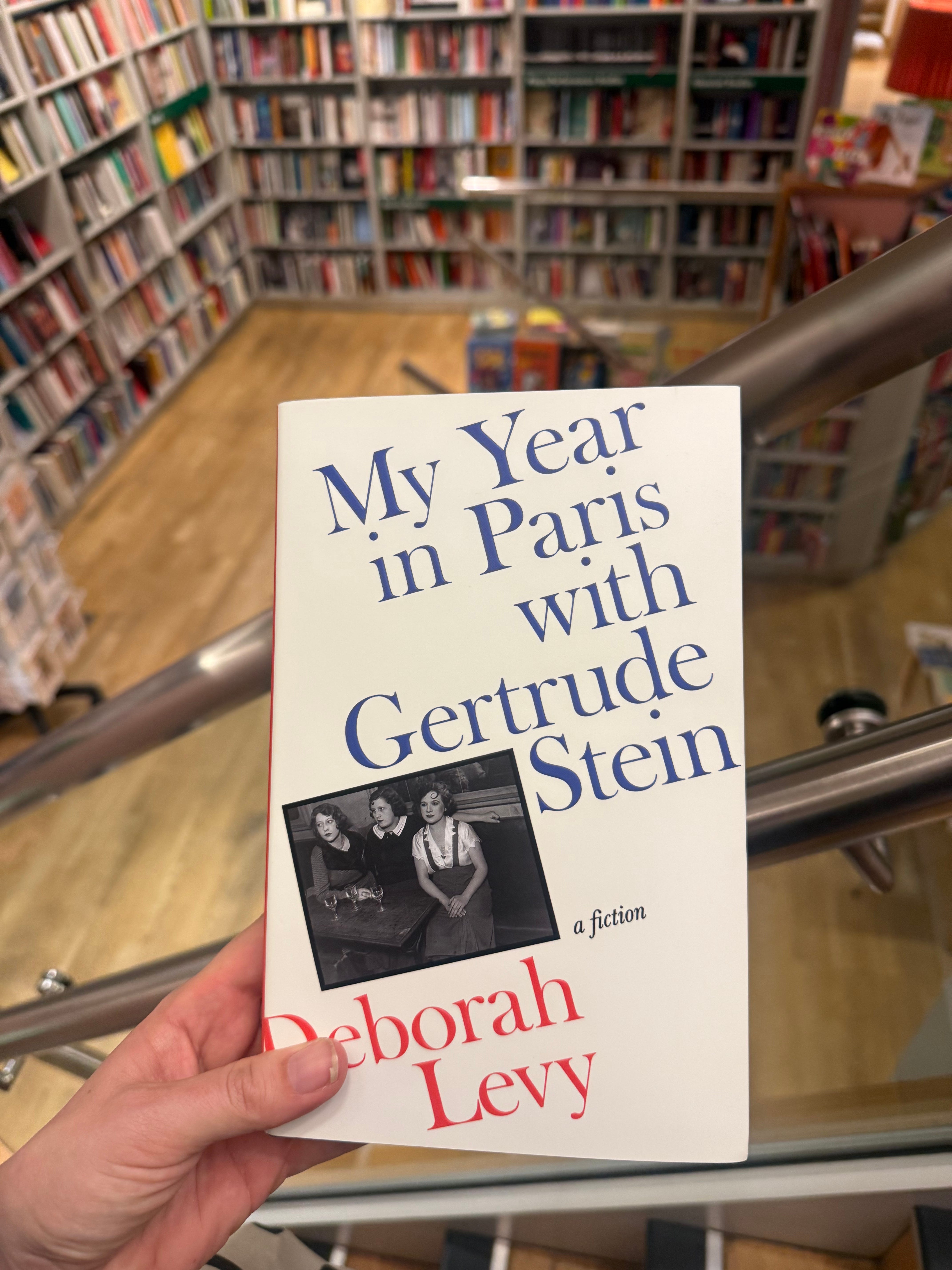
I keep reading books by people who live in Paris, trying to figure out if we’re in the same city. Levy’s year with Gertrude Stein was my favorite, but I'd also recommend these other two.
Le Barman du Ritz by Philippe Collin
My Year in Paris with Gertrude Stein by Deborah Levy
The Sea in the Metro by Jayne Tuttle.
On an average week, how much do you read and when?
In the fall of 2019, I gave myself permission to read as work (as any writing or thinking to me requires joyous reading). I sat at a table on a regular workday and just read. It was glorious!
On an average week I read a book or two. It used to be more, now it’s a little less. Often one audiobook while I walk back home from my son's school. Sometimes I stop on the way home to read at a coffeeshop or a park. I still read at a table, but we got an Eames Lounge Chair and everyone in the family loves it. And obviously before bed (usually crusty non-fiction).
It feels a tiny bit pretentious to talk about reading books, but then I come across stuff like Atlantic’s The End of Reading Is Here and I remember how urgent it is to talk about books and reading (not only writing! or writing for internet!), to make it visible that this, still, exists as a way of being.
What do you like to read? How has your taste changed over the years?
Fifteen years ago my Goodreads was full of productivity books. Now I read almost entirely fiction. The software industry is so stubbornly literal? utilitarian? earnest? that maintaining an associative, loose-thinking brain feels like a secret weapon. Simon Sarris: "The goal is not to digest information, but to layer over your reality with a fresh coat of moss."
What’s a reading ritual or habit you’ve developed that’s unique to you?
I memorize sentences. I did poetry reading and performing when I was young. Memorizing trains my ear to recognize what good writing feels like, in my mouth. And the sentences come back to me: on walks, in the shower, mid-conversation, sometimes years later.
Do you take notes while you read? If yes, are you particular about your materials - notebooks, pens, highlighters vs. pencils?
Yes! I’m all about marginalia. I wish I cared more about the specific notebooks and pens, but it’s mostly Muji 0.38 gel ink pens and Moleskines, mostly out of habit. (Although I am eyeing this brand)
I also have a Kindle, with 13 years of notes in a text file, and with large language models I’ve been able to surface all kinds of fun patterns out of it. I’m a founding VIP of Readwise all the way back from 2017, and still wish there was a way to stumble upon other peoples marginalia (RIP Readmill!).
Where do you get ideas about what to read?
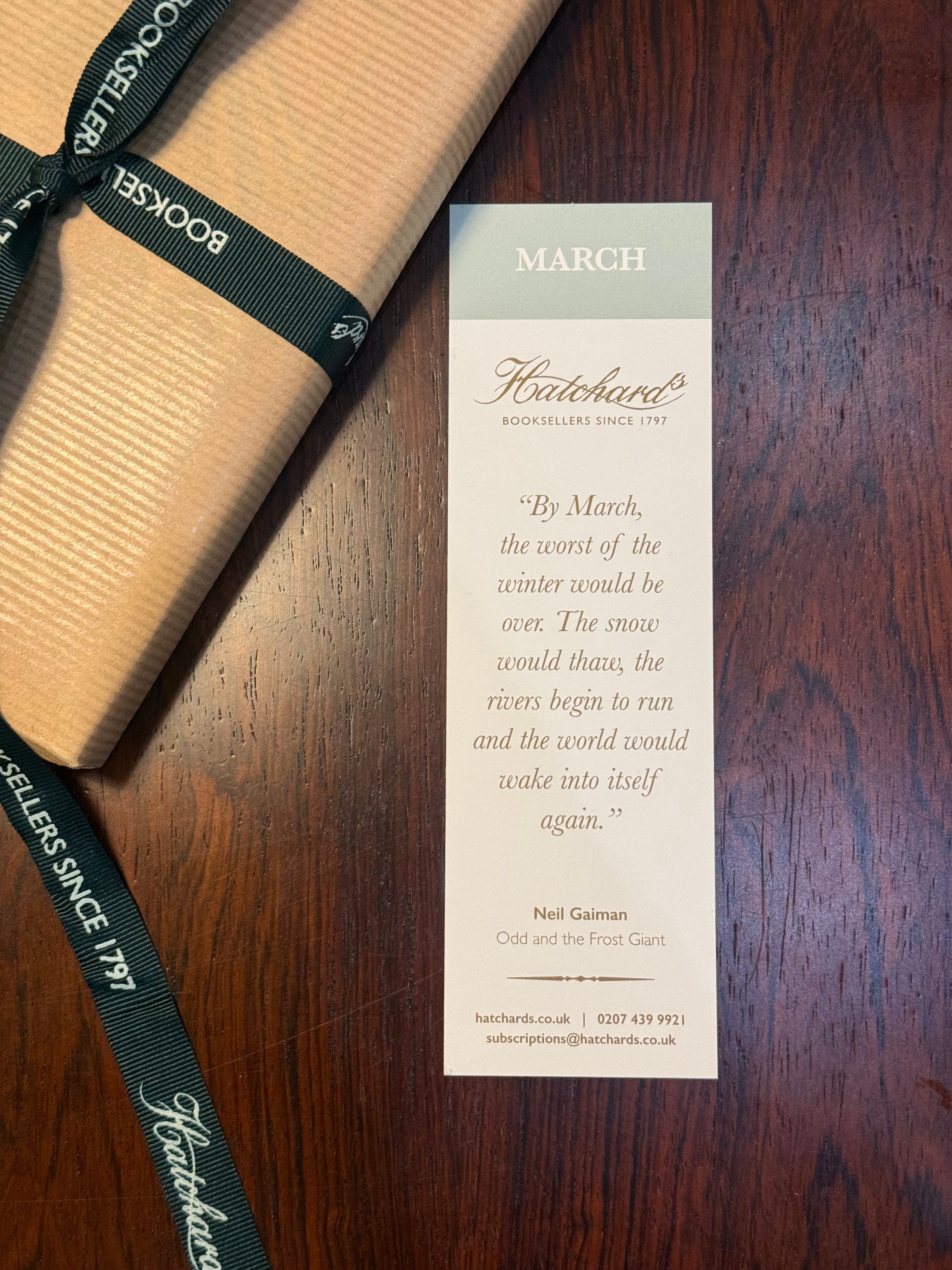
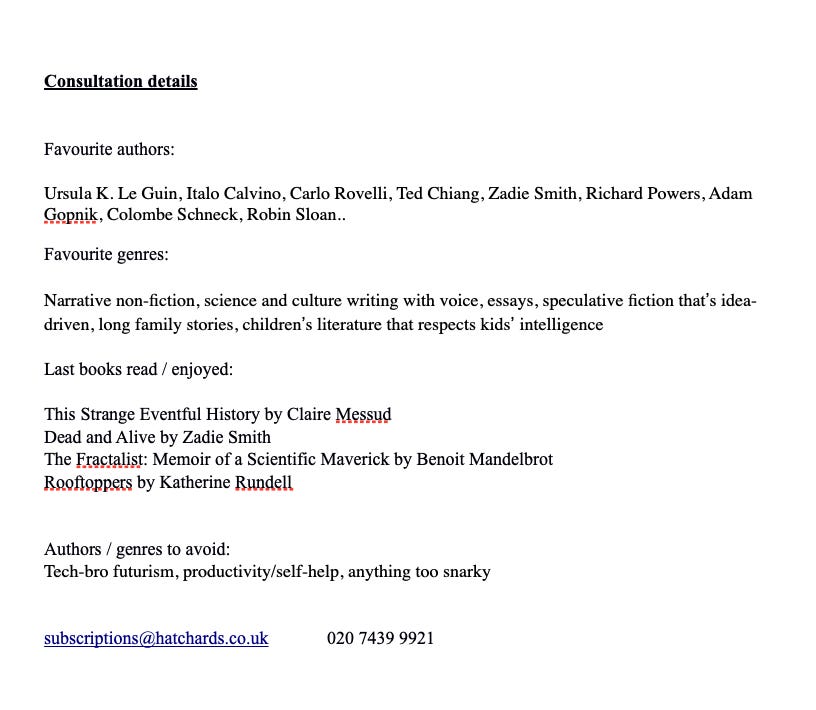
Friends, acquaintances, random tweets, libraries, top lists of newspapers, bibliographies of other books. But one of the loveliest gifts I’ve ever received was last year’s Christmas gift to my husband from Hatchards. Over the year, I get twelve books from their selection of fiction and non-fiction, posted at home. I had to fill in a questionnaire about what I like. The selections so far have been so fun! Eclectic, weird, tasteful, just very thoughtful.
This is also the first summer in many years that I’m putting up a wishlist for summer reading! Past summers have been intense with a small child, but this year I’m hoping to read some of the following (we’ll see at end of the year what happens):
Pond by Claire-Louise Bennet. I've seen her name everywhere this year.
Elisabeth by Eric Rohmer. Every year I plan on having a very Rohmer summer, so naturally Elisabeth, his only published novella, now also in English, is on my list.
The Parisian Heist by Jo Piazza. I used to read more crime and nordic noir in the summers, but stopped because it got too bloody. Maybe a mystery romp in Paris will fill the need!
Giovanni’s Room by James Baldwin. A classic I haven’t read.
The Proust Project by André Aciman. Aciman to me seems like the quintessential summer author.
The Planetary Garden and Other Writings by Gilles Clément. Landscape architecture is the closest I’ll come to work.
L’art du détour. Du bonheur de se perdre en France by Victor Coutard. I try to read a few books a year in French and I love Victor’s newsletter.
Looking at the list I notice I’m lacking at least poetry, memoirs, short stories and anything in Finnish! Any recommendations for me?
When people ask me how come I read as much as I do, I frequently just give them a list of things that I don’t do as regularly as I probably should: exercise, clean house, spend time with friends. What do you choose NOT to do in favour of reading?
Almost zero TV, I've watched maybe two movies a year. I don’t do my nails or play videogames (anymore, maybe one day again). I also don’t finish books before starting new ones. This newsletter is often not on time (like today, because 14 Juillet I wanted to finish the bilingual brain book while watching the parade). I also don’t have a ton of friends here in Paris, so books fill that.
What is one book that you find yourself recommending to people over and over and over again?
I searched for my answer in the archive of this newsletter and the answer is clear: The Summer Book by Tove Jansson. There you go.
Books read so far in 2026
(Some linked books lead to Bookshop.org, and I earn a small commission each time someone uses the link to purchase a book.)
January 2026
Heart the Lover by Lily King. This was in many ways the perfect reading novel (it’s saccharine in the same way as Patchett, but perfect for me. I’ll never listen to Bob Dylan’s Boots of Spanish Leather the same.
Kolme saarta – isä, äiti ja minä by Sophia Jansson
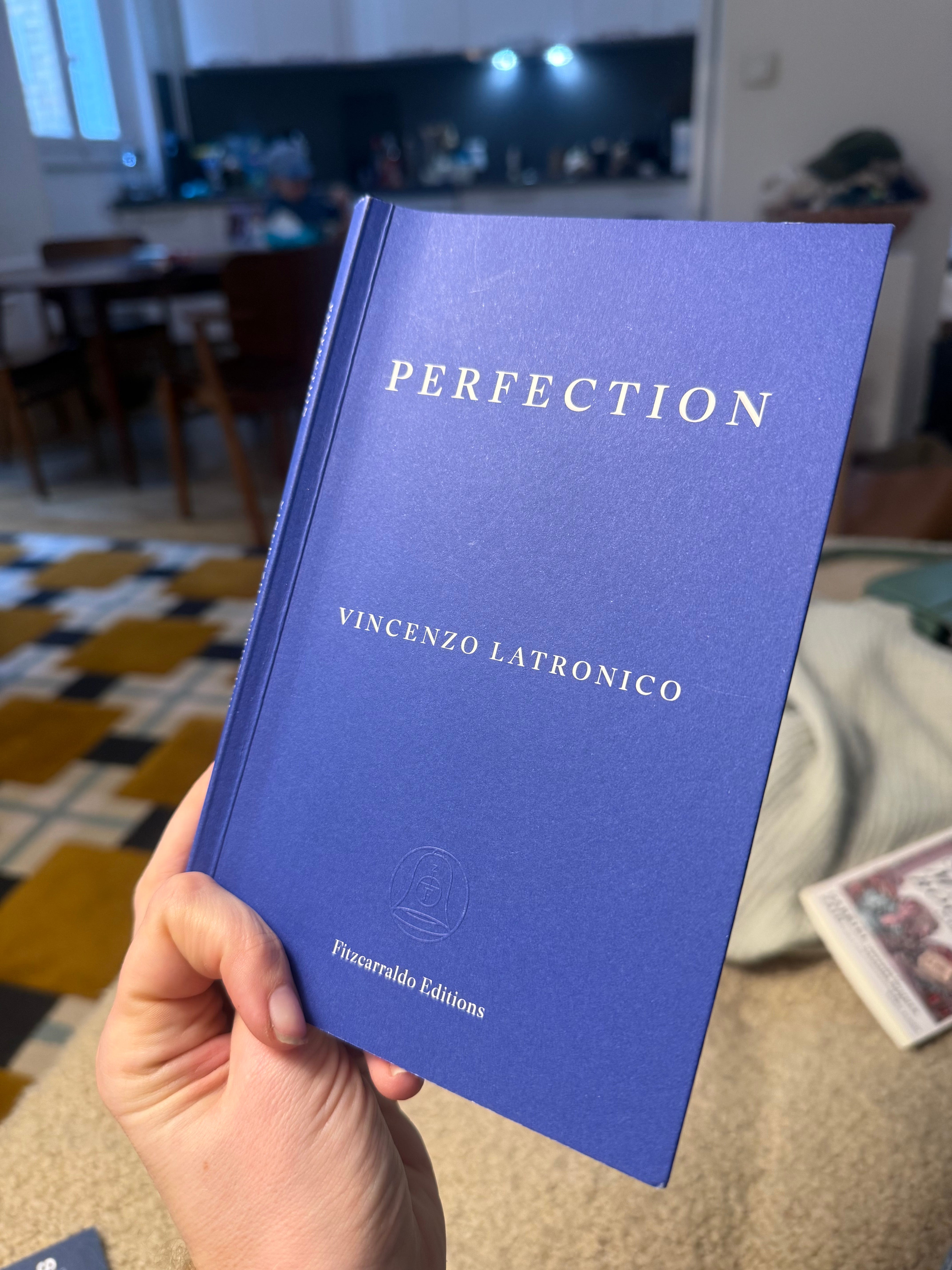
Perfection by Vincenzo Latronico. Wrote about this.
Maailman viimeinen eläin by Suvi Auvinen
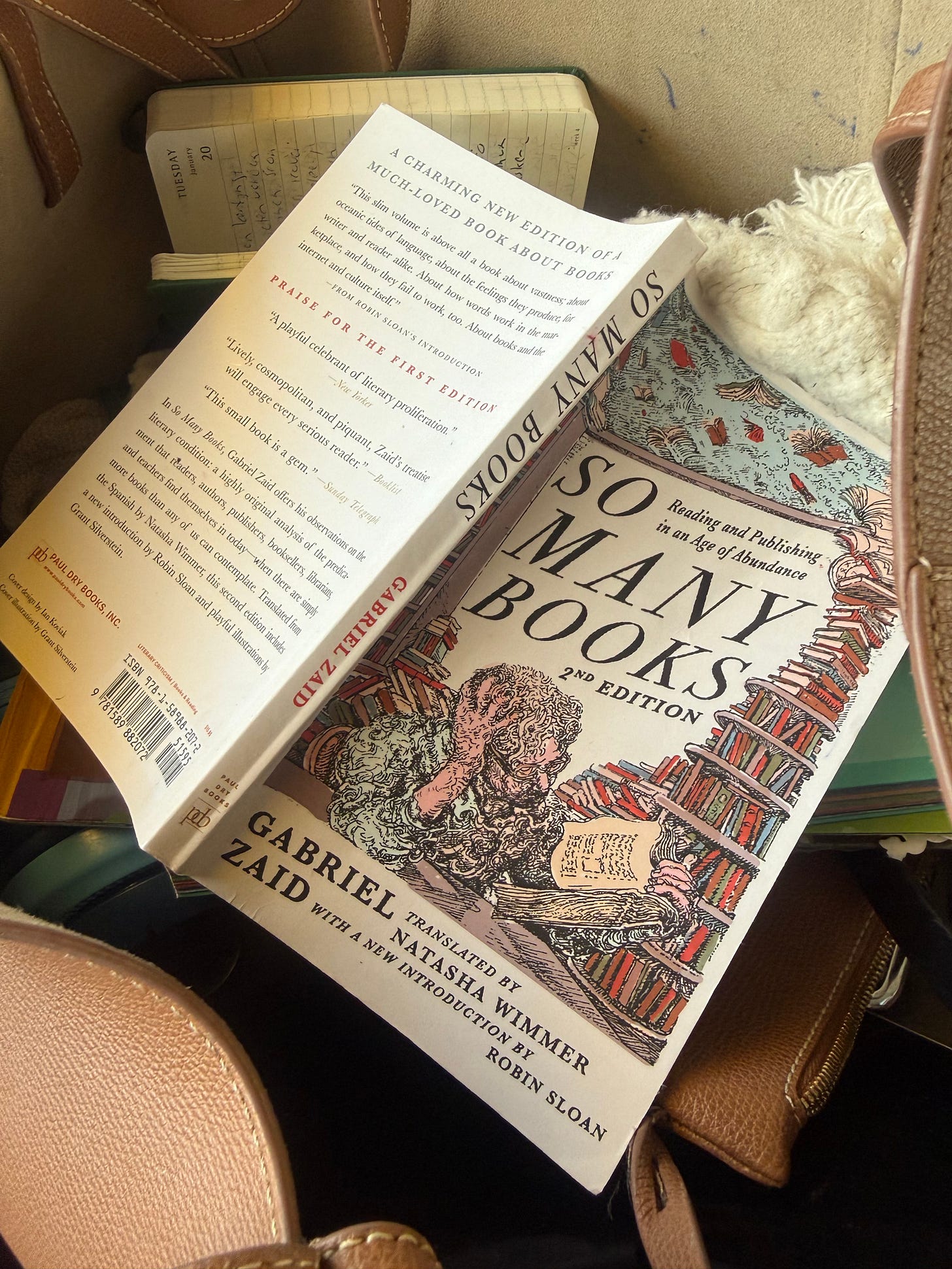
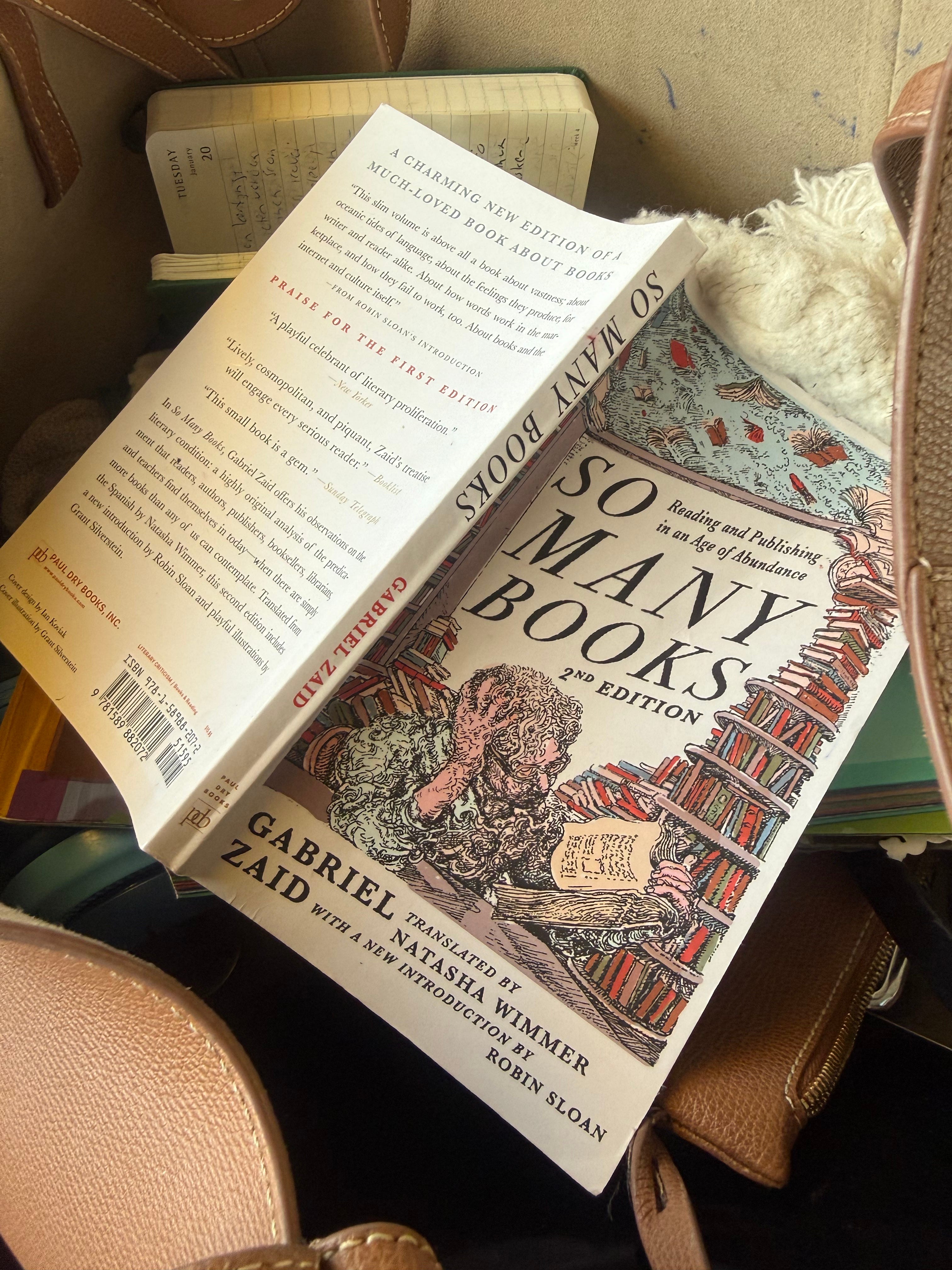
So Many Books by Gabriel Zaid. Wrote about this, too!
February 2026
Writers & Lovers by Lily King.
Morphogenesis by Jane Rogers. Alan Turing in a tiny scifi novella!
Making Sense of My Life in Science by Evelyn Fox Keller
Eristystila / Kapinoivia naisia by Monika Fagerholm
Avalanche: A Love Story by Julia Leigh
The Paris Library by Janet Skeslien Charles
Miss Morgan’s Book Brigade by Janet Skeslien Charles
March 2026
The Blue Jay’s Dance by Louise Erdrich
I Deliver Parcels in Beijing by Anyan Hu
So You Don’t Get Lost in the Neighborhood by Patrick Modiano
Refiguring Life by Evelyn Fox Keller. My favorite of the Fox Kellers I read.
Eve by Cat Bohannon
The Power by Naomi Alderman. This was a part of the book subscription service and it broke my streak of not finishing sci-fi books. Enjoyed it a lot!
Kirjeitä säveltäjille by Juha Itkonen
April 2026
Katabasis by R.F. Kuang
Le Barman du Ritz by Philippe Collin
Syteen tai saveen by Emma Alftan
From Two to Five by Korney Chukovsky. So many thoughts on this book, I will return.
May 2026
The Radiant Dark by Alexandra Oliva
Monumenta by Lara Haworth
Life, Almost by Jennie Agg
Killing Thatcher by Rory Carroll
North Woods by Daniel Mason
My Year in Paris with Gertrude Stein by Deborah Levy. Of all the Paris themed books, this was my favorite.
A World Appears by Michael Pollan
June 2026
Ongoingness: The End of a Diary by Sarah Manguso. This pairs nicely with Levy’s books since both are books that speak of things by not speaking of them at all.
Napaan asti by Linea Maja Ernst
The Laws of Thought: The Quest for a Mathematical Theory of the Mind by Tom Griffiths. This too! Very good.
Whistler by Ann Patchett. I don’t care about the subject she chooses, I’m always mesmerised.
Aikavuoret by Jantso Jokelin. The tradition of essay writing isn’t very strong in Finnish literature right now; this was a lovely exception.
Ghost Stories by Siri Hustvedt. Loved this.
July 2026 (so far)
Naisen päiväkirja by Eeva Kilpi. Remembering what you wanted to do in the first place…
Language Machines: Cultural AI and the End of Remainder Humanism by Leif Weatherby. I started this after attending a French salon and realizing I need to read more on continental philosophy and its impact on language and machines!
A Feeling for the Organism: The Life and Work of Barbara McClintock by Evelyn Fox Keller
The Artist by Lucy Steeds
The Sea in the Metro by Jayne Tuttle
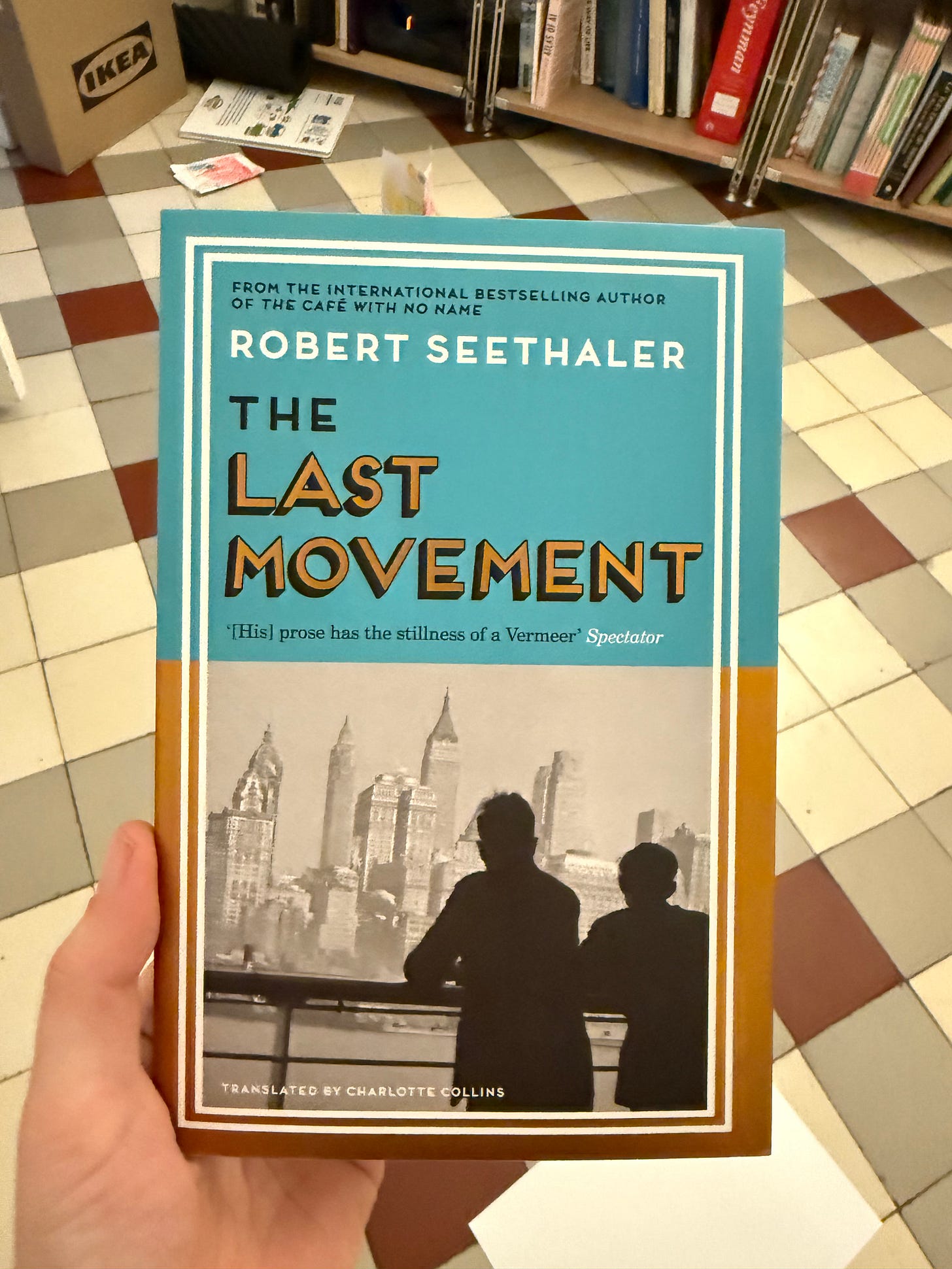
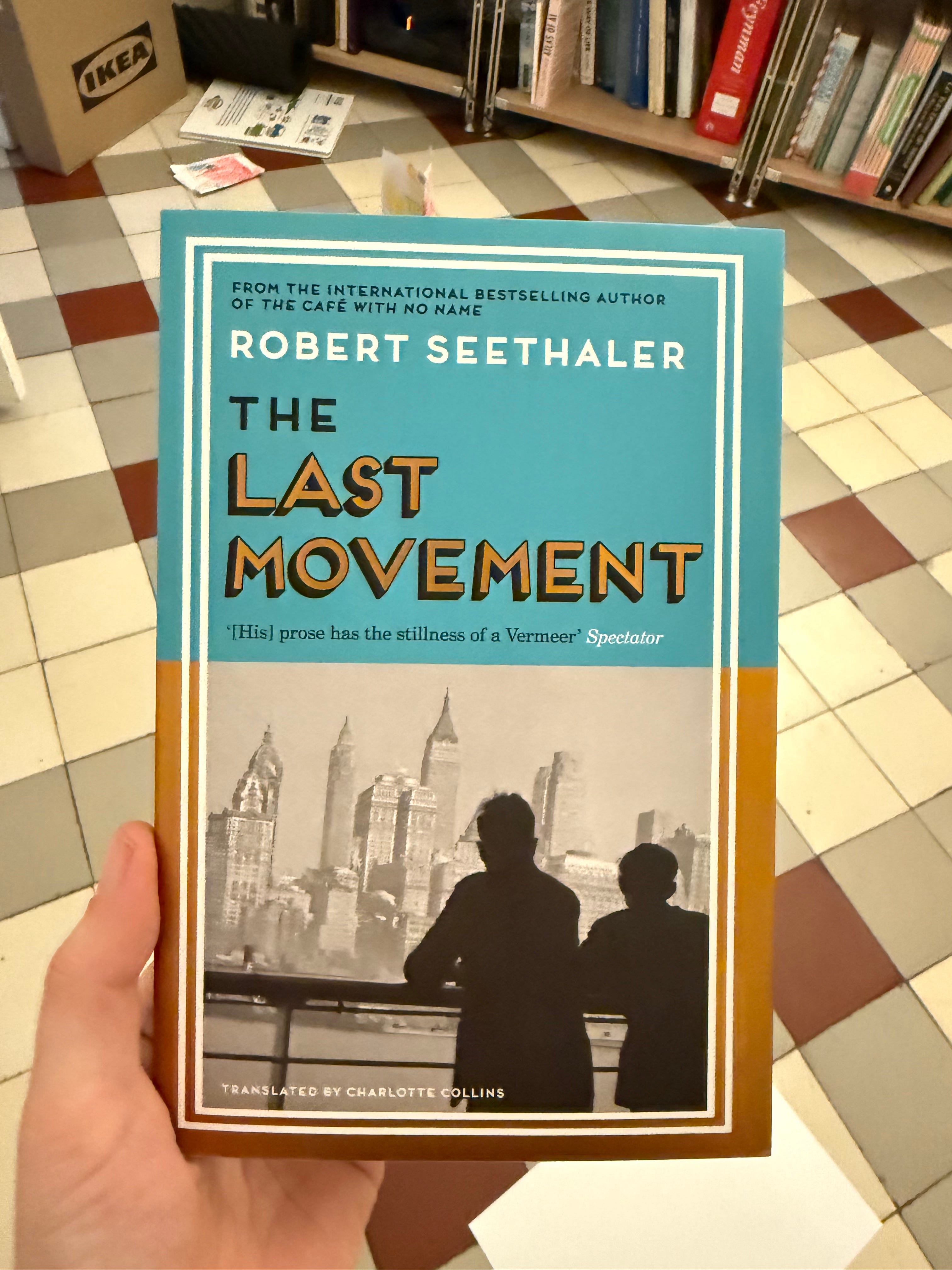
The Last Movement: A Novel by Robert Seethaler. Made me think of Joel Haahtela’s writing, lovely, short novella on Mahler.
The Bilingual Brain: And What It Tells Us about the Science of Language
by Albert Costa
Thank you for taking the time to put this all together. I'm in awe with how much you've read this year!