

My name is Linda. I write a bi-weekly newsletter about computer science, childhood, and culture.
I’m waking up in the pre-dawn darkness of Helsinki. I’m always surprised by how quickly the noir spreads. This edition includes an AI portrait experiment in Helsinki, a few thoughts on what’s happening in Paris and a fashion update. So I’m venturing out of my comfort zone.
1.
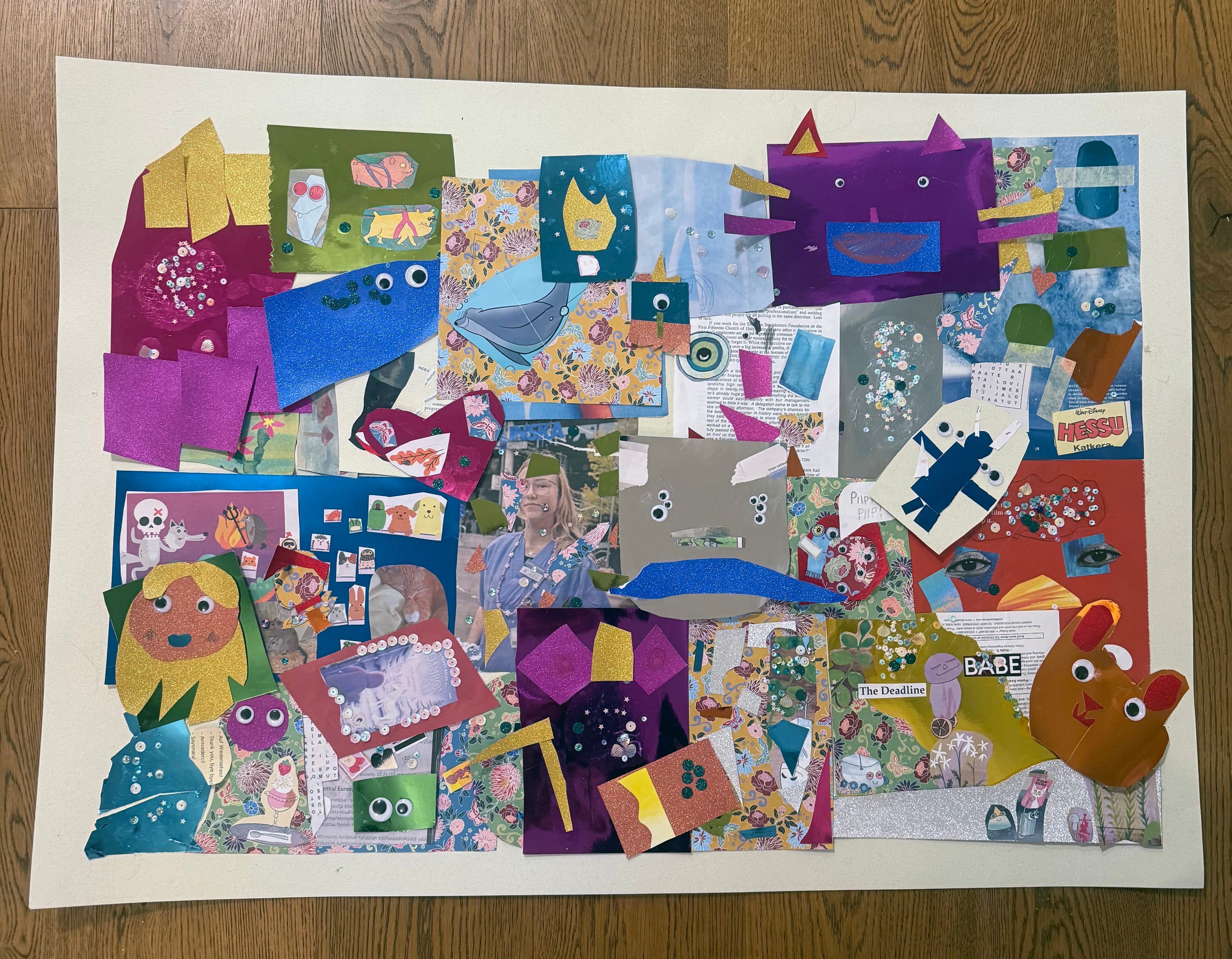
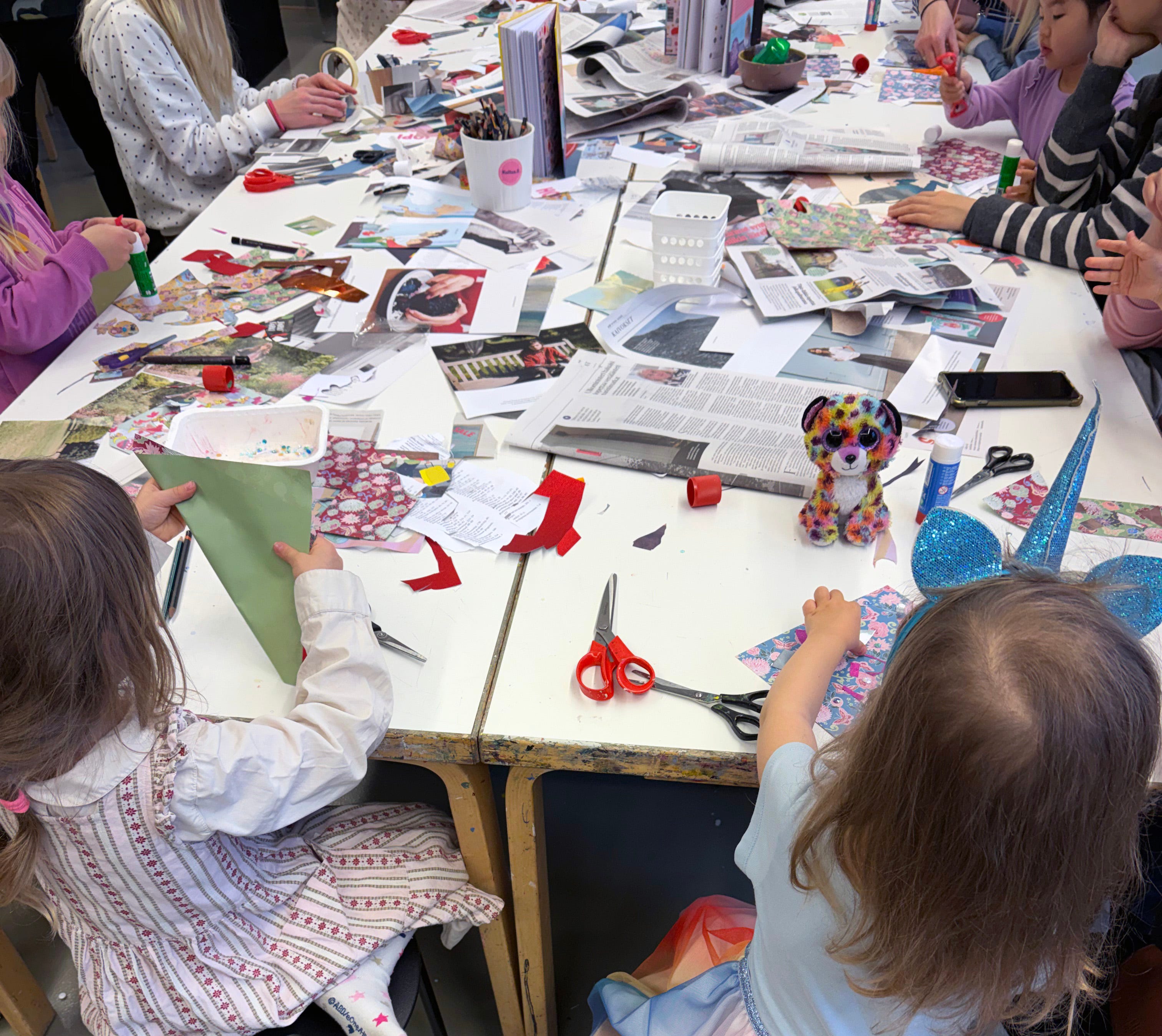
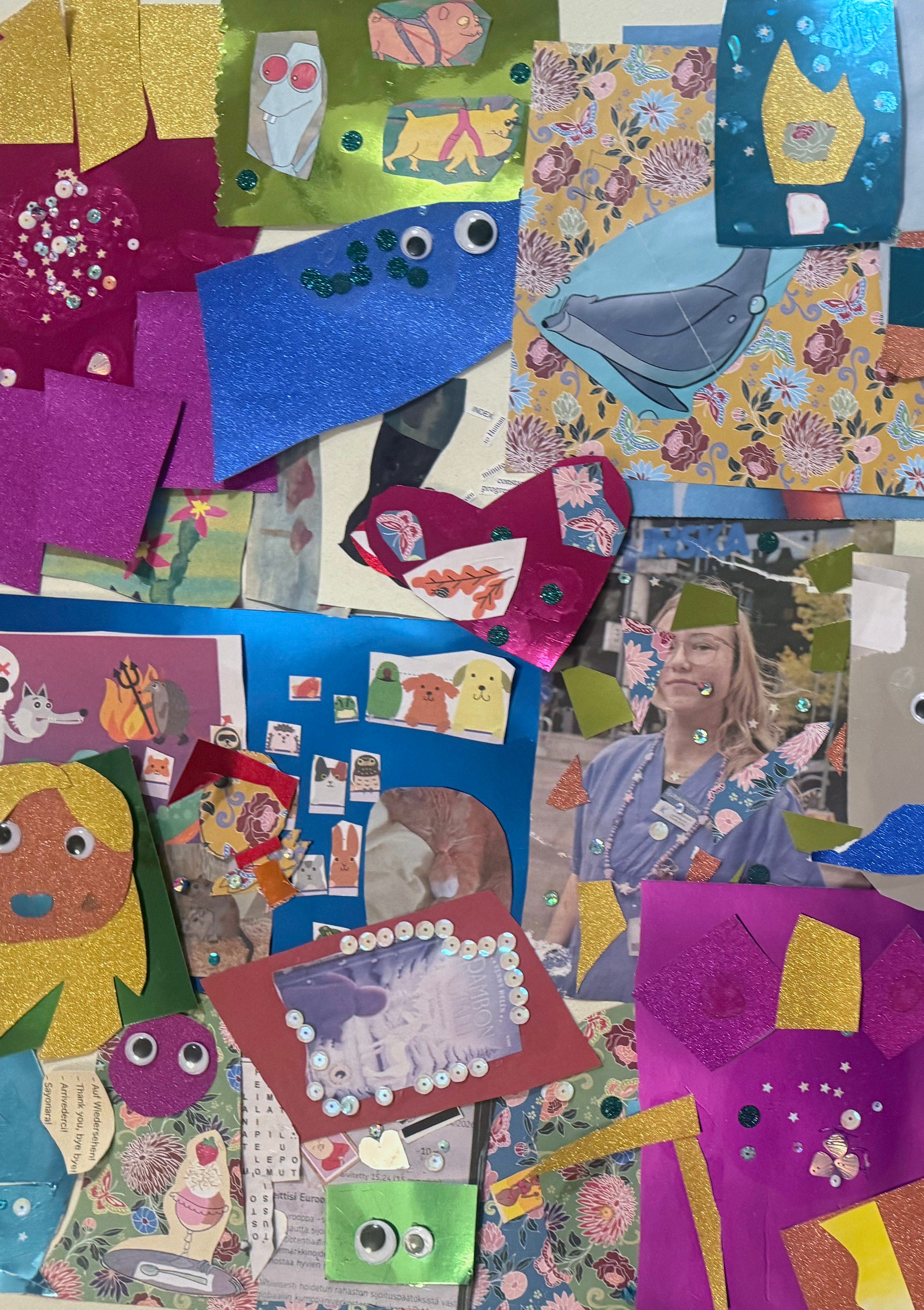
Last Saturday I continued my experiments with teaching about AI at Annantalo. The brief for the children, aged two to thirteen, was what does AI look like? The materials included old newspapers, books, foil and glitter paper, scissors, glue sticks and googly eyes. I chose collage on purpose, because a language model is a material built from writing we did and conversations we had. Collage is too.
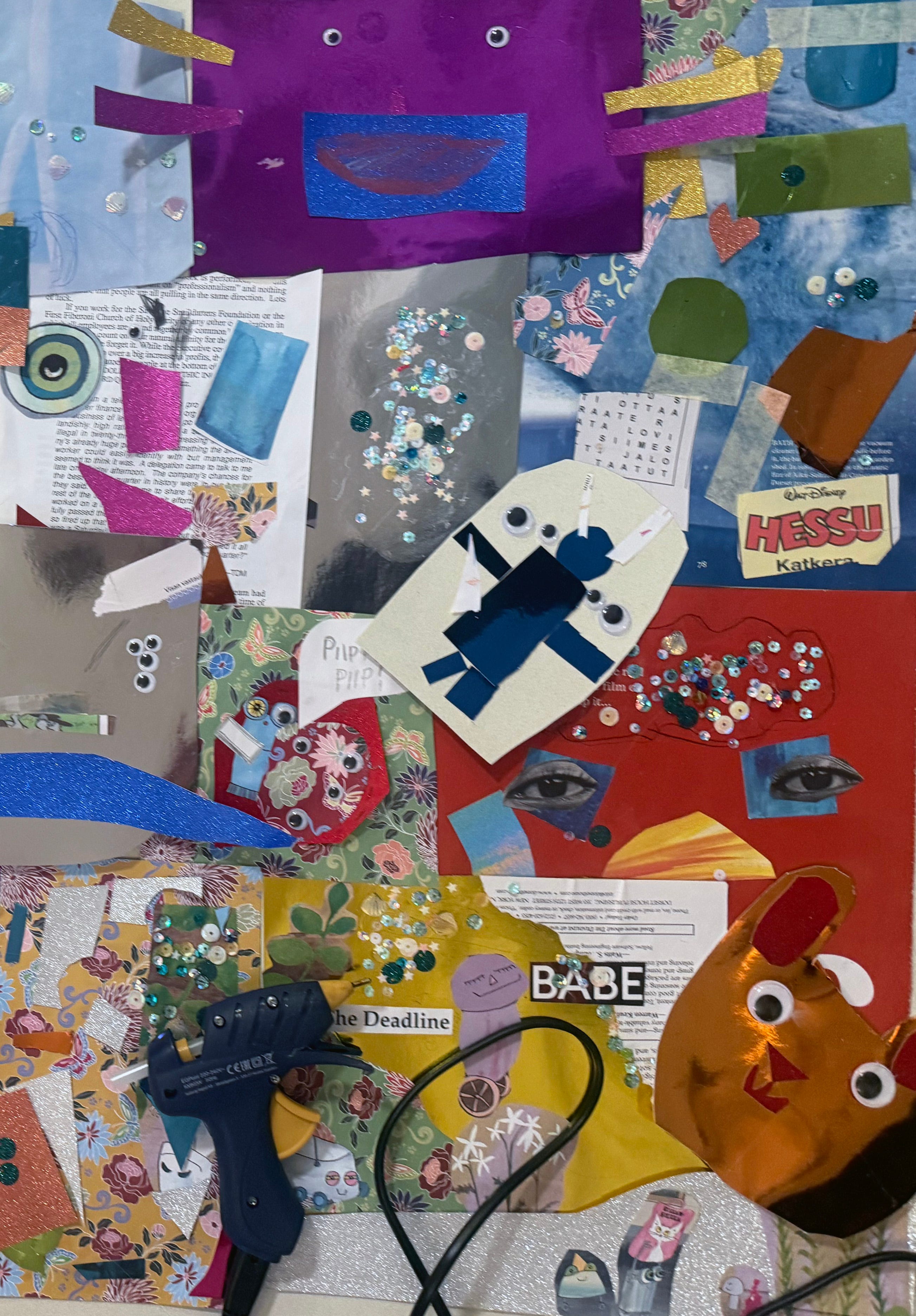
The children found things I hadn’t planned to teach. They gave AI enormous mouths. They glued snippets of text (Auf Wiedersehen, thank you bye bye, Arrivederci, Sayonara) because AI talks so much. One child covered a newspaper photograph of a nurse with foil shards and sequins until she was half machine. They noted that the foil paper reflects the watcher, just as AI sometimes mirrors you back.
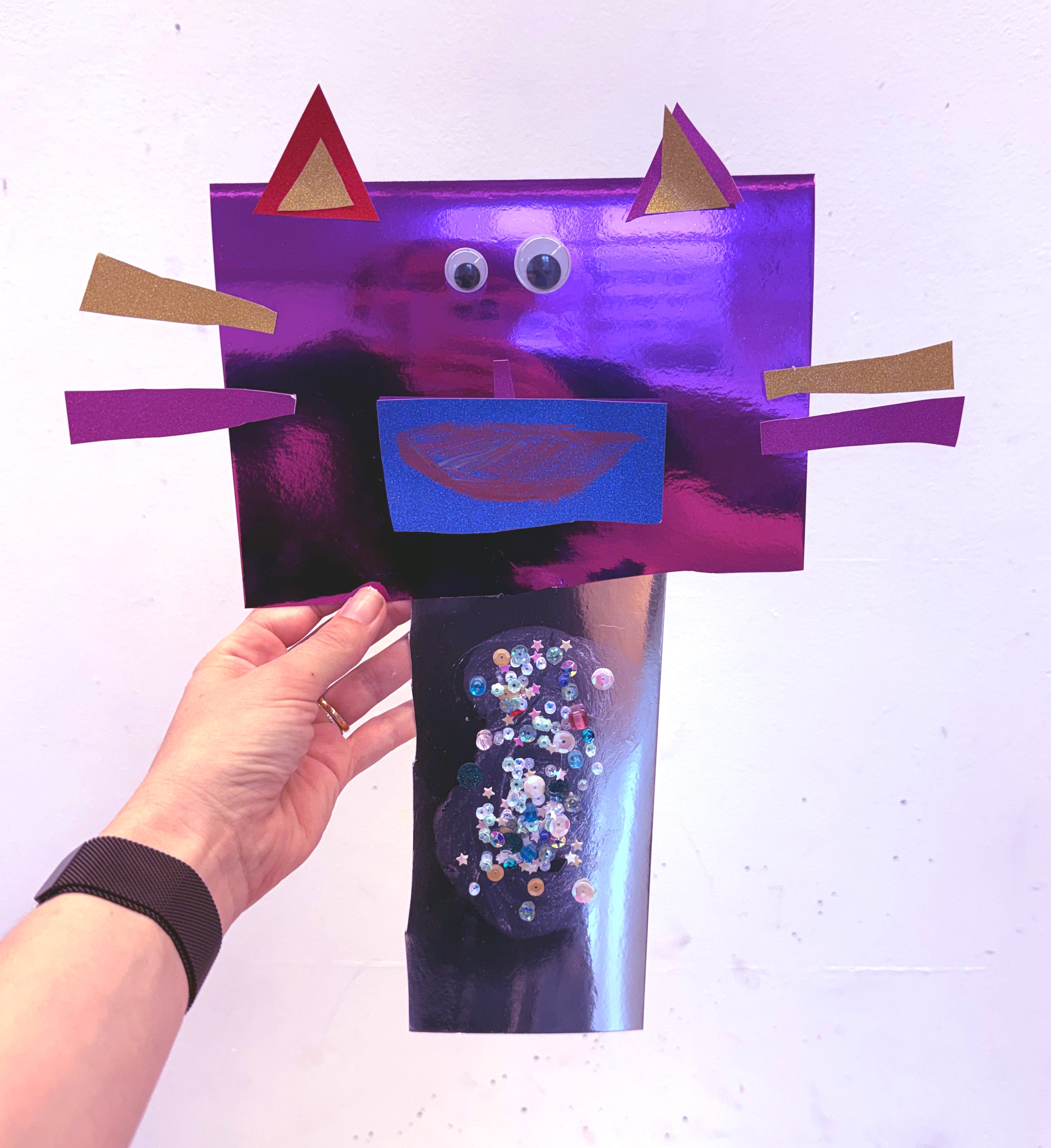
My favourite was the cat that vomits sparkles, which is AI slop in one portrait. And many children fell in love with the floral paper, so half the portraits share the same roses, which also feels very 2026.
2.
David Hockney on why collage is a form of drawing:
DH: Collage itself is a form of drawing. I always thought it was a great, profound invention of the twentieth century. It’s putting one layer of time on another, isn’t it? [...]
MG: Your photo-collages, such as Pearblossom Hwy (1986), breaks up the single-point perspective view of the world into dozens of different viewpoints [...]. And yet you classified Pearblossom Hwy not as a work of photography but as a drawing.
DH: [...] The moment you make a collage of photographs it becomes something like a drawing.
MG: Why?
DH: Because there is no single way to join them. If you make a decision about something like that, isn’t that exactly what you are doing when you are drawing?
— David Hockney, in conversation with Martin Gayford, A Bigger Message: Conversations with David Hockney by Martin Gayford (2011)
3.
I’m looking for a Helsinki-based research assistant for a small project!
For spring 2027, I’m looking for help with a small study exploring the differences between a playground and a classroom in learning computer science.
What and when?
You’ll co-lead sessions with me for two third-grade classes, one at the playground, one in the classroom. You’ll collect tasks, drawings and short conversations with children and adults at the Ruoholahti playground. The study is also a part of the TICE programme at the Raspberry Pi Computing Education Research Centre (University of Cambridge).
The dates: 5–21 February 2027 and 3–18 April 2027 in Helsinki, part-time on days that fit your studies (approx. 15 hours).
What do you get?
Data for a bachelor’s or master’s thesis, a certificate and reference, experience with an international research programme, and a small stipend.
Interested?
Tell me briefly about yourself and your studies.
linda@helloruby.com
4.
How are you? How is Paris? So many friends have texted me over the past few days. Our neighbourhood is completely normal: if anything the student protesters at the local lycée have been a highlight of my autumn, their witty slogans, card games and orchestre reminding me on my daily walks how much the young just need to be heard. Overcrowded classrooms, changing teachers and crumbling infrastructure are problems we should try to solve. (Soyons réalistes, demandons le minimum is a twist on the May 1968 slogan. This time they’re demanding the bare minimum.)
I always turn to Lauren Collins for her reporting (and her writing in general), I loved teaching in the banlieue by Madeleine Schwartz, and with the French you always end up at Victor Hugo: Chaque enfant qu’on enseigne est un homme qu’on gagne.
But the unrest of the past week is something else and less about classrooms, more about the elections and the mood of an agitated, unhappy country. The upcoming months will be restless.
5.
I’m reading Hilary Mantel’s A Place of Greater Safety, which is the French Revolution through Danton, Robespierre and Desmoulins. I keep noticing how often the best books about a country are written by foreigners. Olivier Norek, a Frenchman, wrote my favorite thriller about the Finnish Winter War called The Winter Warriors (no Finn could ever treat our history with such pacing!). Julian Jackson, a Brit, wrote the De Gaulle biography A Certain Idea of France. Being from somewhere else gives you air.
6.
I finished two buzzy books that were both better than I’d dared to hope: American Hagwon by Min Jin Lee and Exit Party by Emily St. John Mandel. Both have this cinematic-universe quality of linking characters across books, which makes me impatient for whatever comes next. I’ll put together a full year list sometime in late November.
7.
During last spring’s foray into developmental biology, I kept running into C.H. Waddington’s name. He was a British biologist who in the 1950s drew one of the most iconic images in science: a ball rolling down a landscape of branching valleys. The drawing looks like Escher or Dürer, with thin, precise lines.
Waddington called these valleys chreods (structured pathways in development). The ball is a stem cell and each valley is a path the cell can take: skin, nerve, muscle. The further the ball rolls, the harder it is to change course.
Quanta has written a story on how the landscape metaphor is coming into its own. The article is great, but this time it was the Instagram comments that caught me.
“Looks like the Higgs mechanism and symmetry breaking,” wrote one. “Reminds me of backpropagation finding local minima in a network,” wrote another.
I kept thinking of the hundred languages of the child from Reggio Emilia, and how a child starts with a hundred ways to express themselves. Drawing, movement, collage, sculpture, music. Then schooling narrows the valleys until only a few languages remain.
7.
This won’t become a fashion letter, but: I bought a dark green Pleats Please outfit for all the upcoming travel. Expensive, yet I feel invincible in it! Issey Miyake invented a way of pleating garments so they held their shape permanently, which feels exactly the kind of high-tech my life needs. (You never need to iron anything.) Also, this sentence convinced me: “All the Lacanians were dressed in Issey Miyake.”
Love your reasoning for using collage!