

My name is Linda. I write a bi-weekly newsletter about computer science, childhood, and culture.
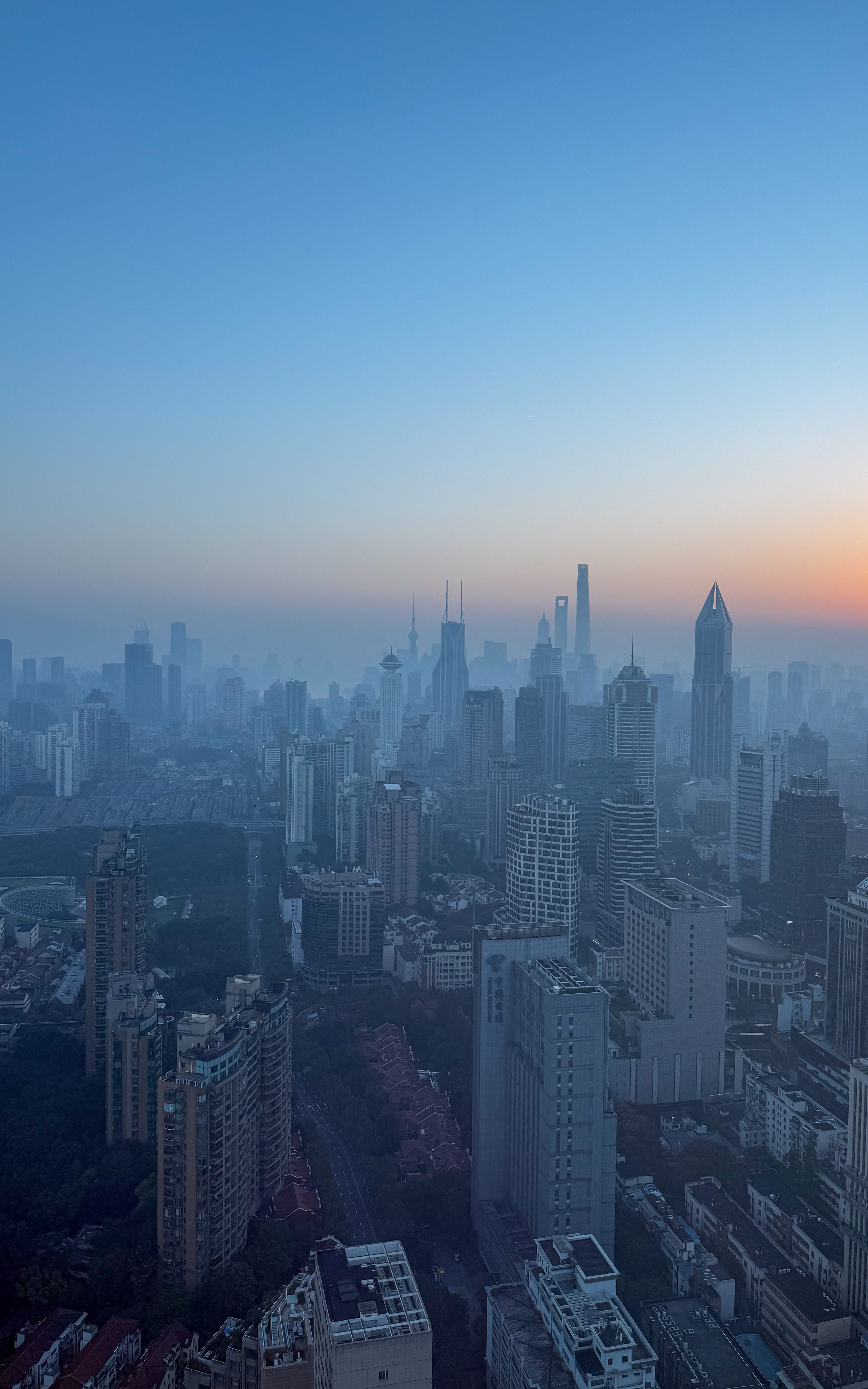
My history with China goes back to 2012, when I organised the first Rails Girls event in Shanghai. I remember arriving at the workshop space in the freezing February cold. All the windows were missing. Everyone assured me that by the following day, when the event would take place, the windows would be there. That was my first experience of China speed. (And the event, it spread to Beijing, Shenzhen, Guangzhou, Chengdu, Wuhan, Xi’an, and Hong Kong!)
Five years later I was invited to Hangzhou for an international design competition. I stood among industrial designers, people working on drones, eyewear, postal systems, presenting my educational philosophy. In a surreal turn of events I ended up winning what turned out to be the largest design award in China.
In the intervening years I kept meaning to go back, but Covid, a baby and other work got in the way. Nine years passed, which in China time is both an eternity and a blip. This fall, the Embassy & Consulate General of Finland in China asked if I’d like to run a few AI-themed workshops, and very gladly I said yes. So last week I toured Hong Kong, Shenzhen, Beijing and Shanghai.
This edition is mostly notes from the trip. I’ll get back to the AI portrait workshops we did with children in the next letter. Until then, it’s November, so time to light candles first thing in the morning and play Moon Safari by Air on repeat.
1.
I try to order a coffee by myself at Luckin, thinking WePay and years of experience in generic coffee shops will help me, but end up in a rabbit hole of translation apps. When the drink finally arrives, the staff and I all cheer in delight.
I like this haze of misunderstandings. Ordinary words become philosophical and poetic. I learn that in Chinese, I run and I am running and I will run all use the same verb form. The word for “play” also, maybe mostly, means “game.”
Speaking with diaspora speakers and people learning Chinese as a second or third language, I find myself sharing my experience of French: how the lack of nuanced grown-up language creates this eternally hopeful, eternally immediate version of me, who only says things in present tense. Sometimes I try to shoot for more abstract ideas in short structured sentences chained together. Lauren Collins writes about this in When in French: Love in a Second Language, and so does Jhumpa Lahiri in In Other Words.
学海无涯, the sea of learning has no shore, I am told, and we all laugh at the difficulty of understanding another culture through its idioms and expressions. Three thousand years of Chinese culture to understand an idiom. A thousand years of French kings to get to poudre de perlimpinpin.
2.
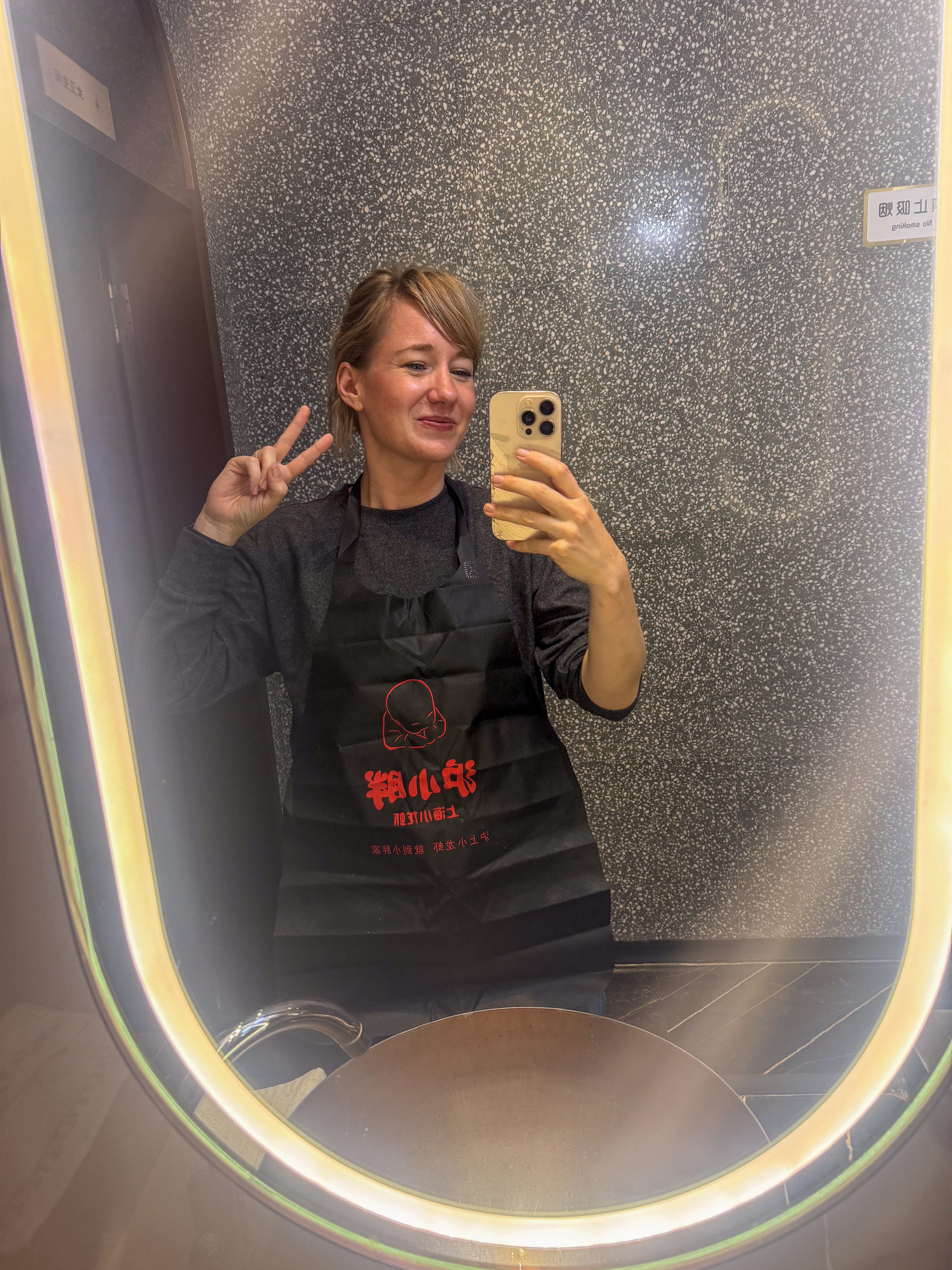
“So you are a hexagonal warrior?” the reporter asks out of nowhere. I glance at the embassy’s media director and she nods reassuringly. Turns out this is a big compliment! 六边形战士 is someone who is good at many things, an all-rounder. The idiom comes originally from Japanese baseball, where a player maxes out all the axes of the radar chart. It’s meme-Chinese, and I love it and start afterwards every introduction with the definition.
3.
I read about the NDRC “One Meter” policy, which asks cities to redesign public spaces from one meter high, the eye level of a young child. In practice, it means signage you can read before you learn to read, ride-hailing platforms prioritizing passengers with infants, and local governments inviting children into planning discussions.
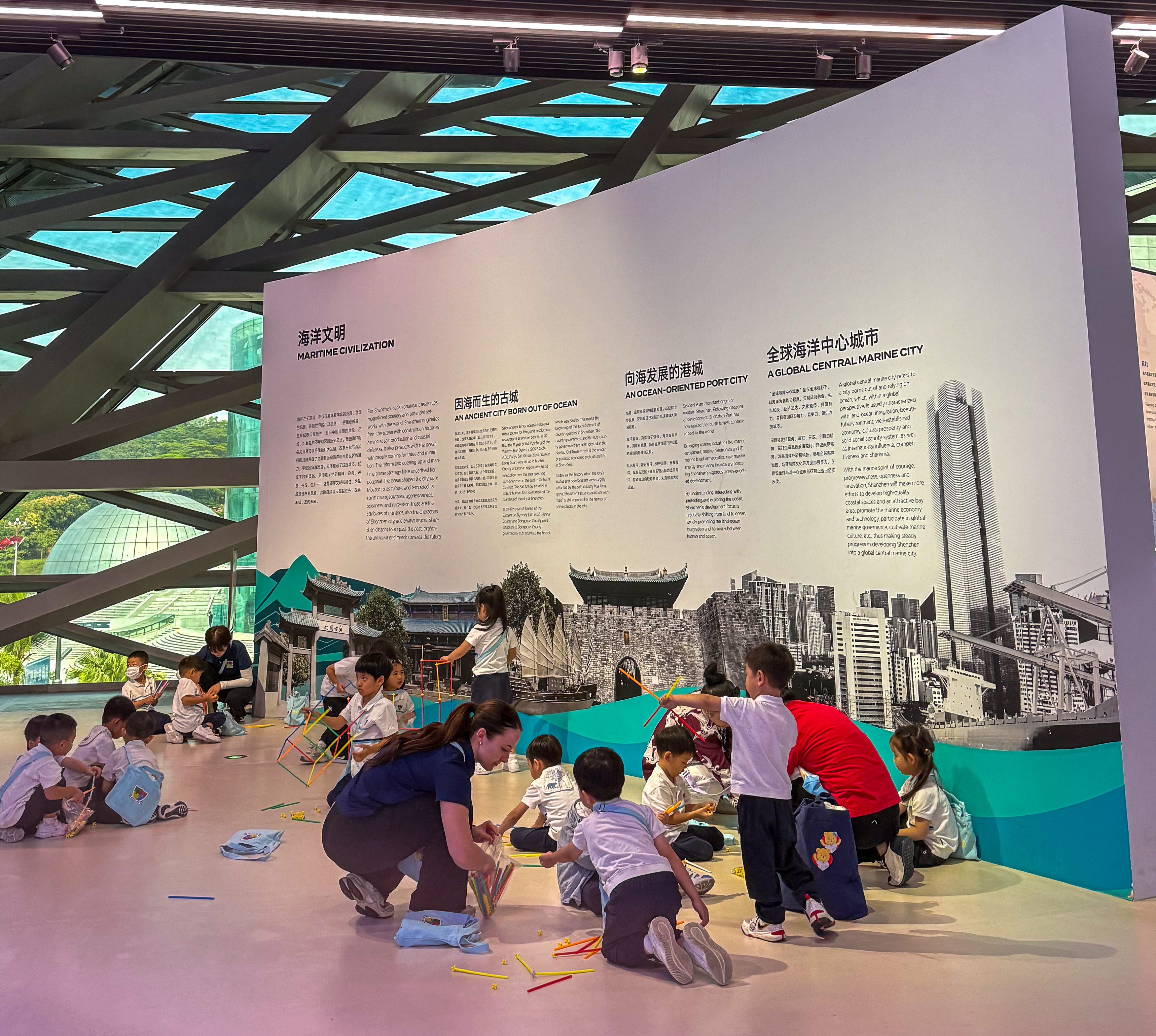
I cry a little at the Shenzhen Urban Planning Museum (like Thomas warned I would). It’s the jetlag but also the sincerity and the boldness of telling the story of Shenzhen. The earnestness, which would read as naive in Paris or London, feels entirely sincere here.
Civic ambition, I write in my notebook.
4.
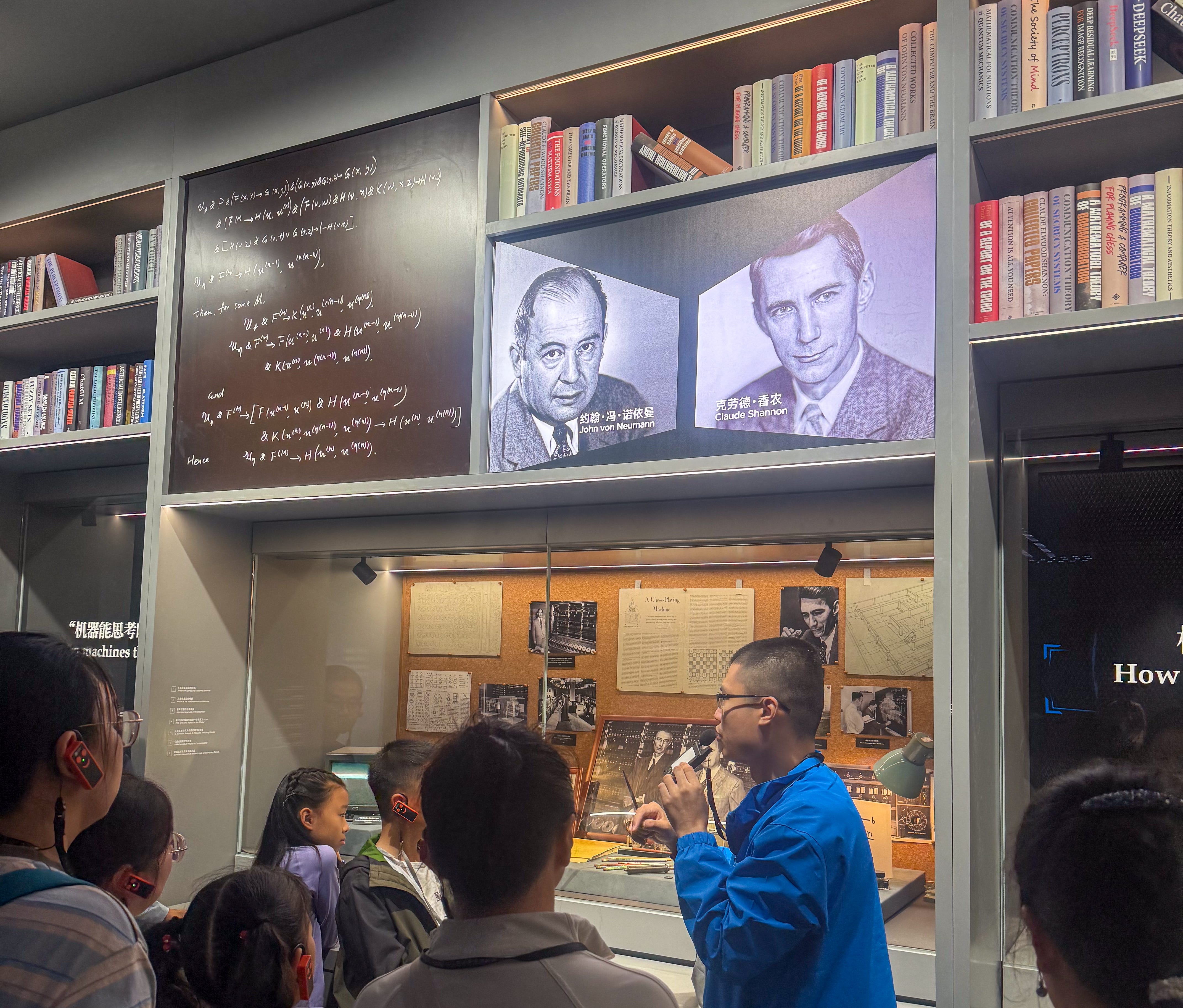
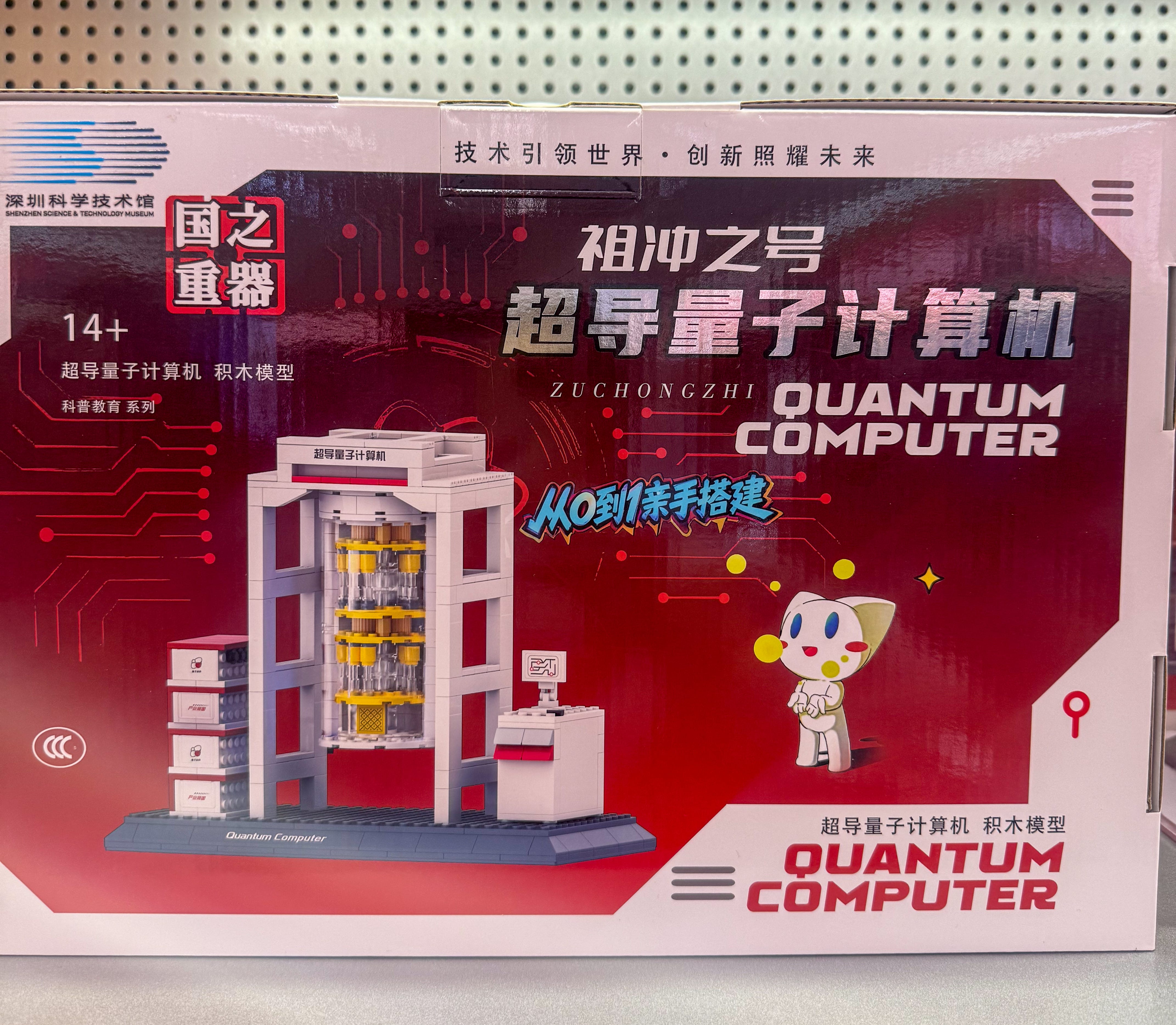
I made a point of visiting science museums in almost every city. Every one of them has something on AI. I meet a company that develops exhibitions for these museums. It takes them 180 days to build a museum.
I learn that Baidu takes its name from a Song Dynasty poem about searching for someone hundreds of times in a lantern festival crowd, only to find them standing alone.
Cixin Liu is everywhere. Everyone drops his name, and I see a small interactive exhibition called Fire Keeper at the Shanghai Museum of Science and Technology based on one of his short stories. The story is a favourite of mine, so even though I don’t understand anything spoken, I follow along. I love that an author I discovered a decade ago still helps me feel connected.
5.
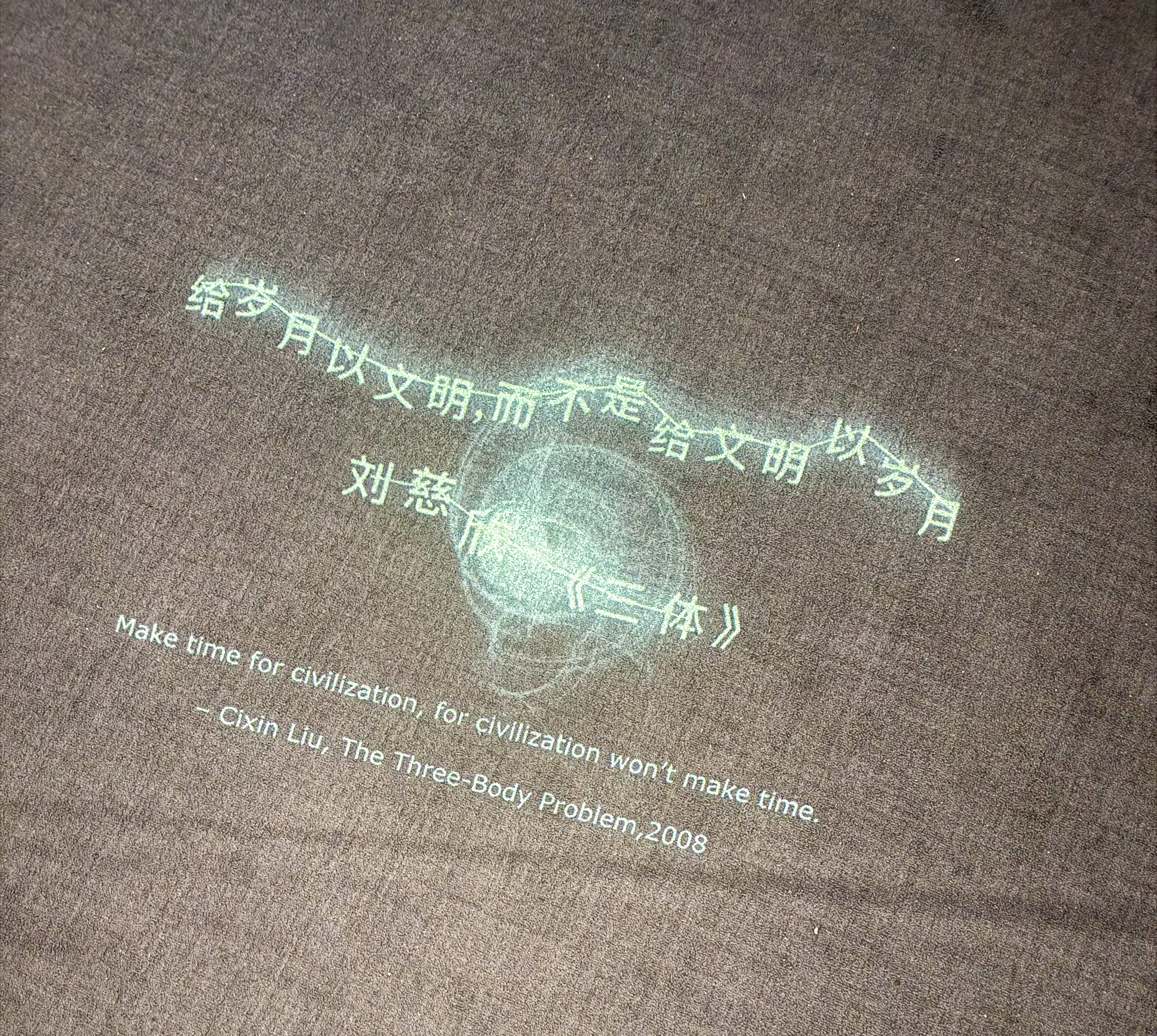
“China used to have no sense of the future. In our subconscious, today was the same as yesterday, and tomorrow was going to be the same as today. The future as a concept doesn’t really appear in traditional Chinese culture.”
— Cixin Liu, The Supernova Era
6.
Years ago my grandmother wrote a book on the I Ching called I Ching: muutosten kirja. I never understood her fascination with the divinatory arts. Then I learn that Leibniz, one of the fathers of digital computing, saw in the I Ching an anticipation of binary arithmetic. In Turing’s Cathedral, George Dyson describes how Leibniz mapped the 64 hexagrams onto binary numbers from 000000 to 111111. I make a note to start thinking about what an I Ching playground might look like.
7.
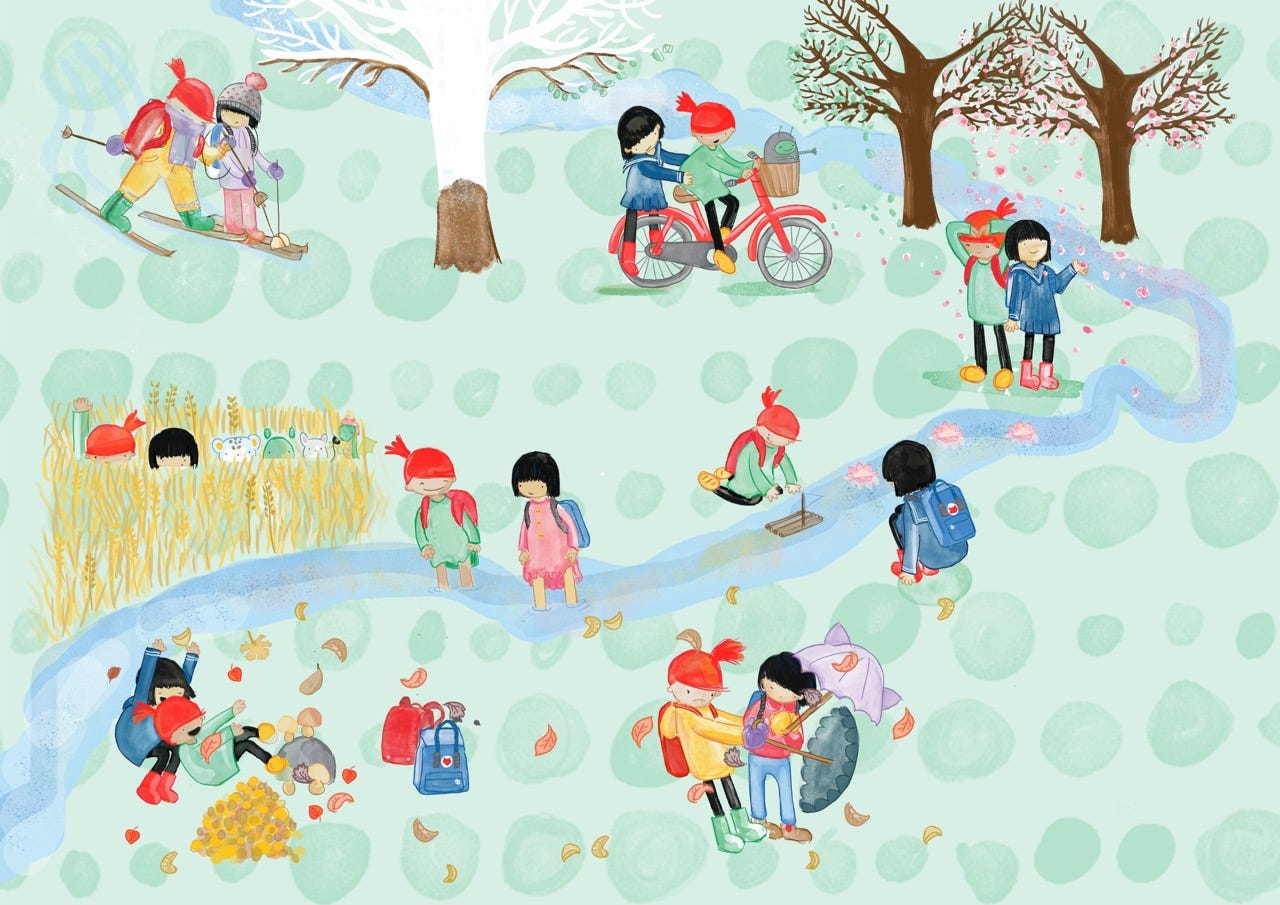
David Hockney, too, was shaped by Chinese scroll painting. I especially love moving focus as a way of seeing (and tried to mimic it in one of the Ruby illustrations).
In Martin Gayford’s A Bigger Message, Hockney says: “I’ve got a facsimile of a Chinese scroll from the time of Giotto. And there is a device in it that reminds me of Claude, The Sermon on the Mount. You realize that as you are walking through the landscape you are being taken to different heights… In Chinese art, it’s called the principle of moving focus.”
And later: “I used watercolour because I wanted a flow from my hand, partly because of what I had learned of the Chinese attitude to painting. They say you need three things for paintings: the hand, the eye, and the heart. Two won’t do.”
8.
But it’s not only the scrolls and illustrations that meander:
“Ming Dong Gu explains that Chinese fiction grew with an emphasis on lyricism, not constrained by ‘the Platonic-Aristotelian restriction of poetics to imitation and narration.’ It relies on pattern, repetition, and rhythm and is ‘organized on a structural principle different from the time-based, direction-oriented, and logically coherent principle of the Western narrative.’”
- Jane Alison, Meander, Spiral, Explode
All week I keep seeing the same thing from a different height.
9.
Every trip should have a library, so here are the books I’ve read on China over the past decade, from which I dug out the quotes above. Readwise’s MCP is a winner! (And they have a lovely new app out for reading!)
Looking for more suggestions on what to read next. Bonus if on Hong Kong, Chinese history of technology and science, and/or more Hessler.